

Specifying a chemical process pump carries incredibly high stakes for any industrial facility. Under-specifying your equipment often leads to catastrophic mechanical seal failures, hazardous fluid leaks, and severe safety violations. Conversely, over-specifying unnecessarily inflates your initial capital expenditures, straining project budgets without delivering proportional value. Standard industrial pumps often default to basic, economical designs. They consistently fall short of the rigorous safety, containment, and reliability mandates required for volatile, toxic, or high-temperature chemical processing. When handling these dangerous fluids, you need robust containment strategies and guaranteed long-term durability.
This guide provides a strictly commercial and technical framework for engineering and procurement teams. We will help you evaluate and shortlist equipment based on proven, heavy-duty industrial criteria. You will learn how to match precise metallurgical classes, assess structural pump configurations, and validate essential vendor documentation. Ultimately, this approach ensures you select the optimal equipment for extreme operational environments, protecting both your plant personnel and your budget.
Key Takeaways
Safety Over Initial Cost: API 610 compliance ensures a minimum 20-year design life and 3 years of uninterrupted service, vastly reducing Total Cost of Ownership (TCO) in hazardous chemical environments.
Material Selection is Critical: Matching API material classes (e.g., A-8, D-1) to specific chemical corrosiveness and operating temperatures is the primary driver of pump longevity.
Configuration Dictates Footprint and Scaling: Choosing between OH (Overhung) and BB (Between Bearings) designs determines pressure limits, maintenance complexity, and installation costs.
Vendor Validation Matters: A true API 610 pump requires stringent vendor documentation, including certified performance curves, vibration testing, and API 682 seal compliance.
When to Mandate an API 610 Pump Over ANSI or ISO Standards
Every procurement and engineering team faces a common dilemma during the design phase. You must rigorously justify the higher initial expense of an API-compliant unit over an ANSI B73.1 model. Standard ISO and ANSI pumps perform exceptionally well for benign fluids like water or mild solvents. However, they lack the heavy-duty casing thickness, robust bearing housings, and advanced sealing architectures needed for severe service conditions. You need a clear, objective framework to make this critical decision.
Let us define the operational risk profile threshold. You should definitively mandate an API-compliant unit when encountering specific industrial hazards. Consider these primary triggers for upgrading your specifications:
Handling highly flammable, toxic, explosive, or lethal fluids where leakage is unacceptable.
Operating process temperatures routinely exceeding 300°F (150°C), which cause standard casings to warp.
System pressures demanding exceptionally thick, heavy-duty casings with built-in corrosion allowances.
Applications requiring a minimum L10h bearing life of 25,000 hours to prevent sudden mechanical seizures.
We must establish a firm standardization baseline. The petrochemical industry universally recognizes API specifications as the non-negotiable standard for heavy-duty applications. The international community identically adopted this framework as ISO 13709. You simply cannot compromise on these standards when fluid containment and operational reliability define your critical success criteria. Standardizing on this rigorous specification protects your plant personnel and prevents catastrophic environmental incidents. If your process involves aggressive media, a standard, commercial-grade chemical process pump will simply not survive the continuous strain.
Critical API 610 Centrifugal Pump Specifications to Compare
Evaluating multiple vendors requires a deep dive into technical mechanics. You must thoroughly understand the API 610 centrifugal pump specifications to make informed, safe comparisons. Let us examine the most critical mechanical factors you should evaluate.
Casing and Pressure Ratings (MAWP)
Maximum Allowable Working Pressure (MAWP) strictly dictates your casing requirements. You must carefully evaluate this rating against your specific system design and relief valve settings. High-heat chemical processes cause significant thermal expansion in metal components. Standard foot-mounted casings warp and twist under these conditions. The standard specifically requires center-line supported casings for high-temperature applications. This intelligent design manages thermal growth symmetrically. It prevents severe shaft misalignment between the pump and the electric motor, keeping the equipment running smoothly. Always verify your chosen casing includes the mandatory 3mm (0.125-inch) corrosion allowance.
Metallurgy and Material Classes
Matching process fluids to the correct material codes is absolutely essential. The specification defines specific metallurgical classes to standardize and simplify this complex process. You cannot guess when dealing with highly corrosive chemicals. Proper material selection prevents premature casing degradation and sudden catastrophic ruptures.
Table 1: Common API 610 Material Classes
API Material Code | Primary Material Type | Typical Chemical Process Application |
|---|---|---|
S-Series (S-1 to S-6) | Carbon Steel / Cast Iron | Non-corrosive hydrocarbons, cooling water, benign transfer. |
C-Series (C-6) | 12% Chrome Stainless Steel | Mildly corrosive fluids, higher temperature hydrocarbons. |
A-Series (A-8) | Austenitic Stainless Steel (316L) | Corrosive chemicals, organic acids, sour water. |
D-Series (D-1, D-2) | Duplex / Super Duplex Stainless | Highly corrosive, chloride-rich media, severe salt solutions. |
Vibration and Rotor Dynamics
Excessive vibration quickly destroys sensitive mechanical seals. The standards impose extremely stringent vibration limits on all rotating equipment. Manufacturers must utilize heavy, stiff shaft designs to comply. A thicker, shorter shaft minimizes radial deflection during operation. The guidelines typically restrict shaft deflection at the primary seal face to less than 0.05 mm (0.002 inches). Less deflection means your mechanical seal faces remain perfectly aligned, extending seal life dramatically. You should always request certified vibration test reports. A common mistake is ignoring rotor dynamics during the initial technical evaluation phase.
Nozzle Load Capabilities
Thermal pipe strain poses a massive mechanical threat to rotating equipment. Different manufacturers handle external nozzle loads quite differently. The rigorous standards require equipment to withstand heavy nozzle loads without distorting the casing or misaligning the motor coupling. You must closely review the allowable nozzle load charts provided by each vendor. Robust, heavily reinforced baseplates and thick-walled suction nozzles separate premium designs from average ones.
Evaluating Pump Configurations: OH vs. BB vs. VS Types
You must select the correct structural classification for your specific operation. We can broadly break these down into three primary solution categories. Each category serves a distinct operational fit within a modern chemical facility.
Overhung (OH) Configurations: Best suited for standard, single-stage chemical transfers.
Between Bearings (BB) Configurations: Engineered for extreme high-pressure, multi-stage demands.
Vertically Suspended (VS) Configurations: Designed specifically for confined spaces and deep sump recovery.
OH (Overhung Pumps - e.g., OH2, OH3)
The OH category represents the true workhorse of the chemical industry. Models like the OH2 (horizontal) and OH3 (vertical in-line) fit standard heavy-duty chemical transfer applications perfectly. They feature a convenient back-pull-out design. This makes routine maintenance incredibly easy. Your maintenance technicians can remove the entire rotating element without disturbing the main process piping or the motor casing. However, you must recognize their inherent limitations. Overhung designs eventually face severe flow and pressure ceilings. The overhung mass becomes mechanically unstable at exceptionally high capacities or pressures.
BB (Between Bearings - e.g., BB1 to BB5)
When your process conditions exceed OH limits, you must move to BB configurations. Models ranging from BB1 to BB5 offer massive structural rigidity. We position these models as the ultimate solution for high-flow, high-pressure tasks. They handle complex, multi-stage chemical process applications effortlessly. The rotor receives robust bearing support at both ends. This virtually eliminates shaft deflection, even under extreme loads. You must carefully weigh this structural rigidity against the practical drawbacks. They carry a significantly higher initial cost and require a much larger installation footprint.
VS (Vertically Suspended - e.g., VS4, VS6)
Sometimes, plant geometry dictates your mechanical choices. We frame VS configurations as the go-to choice for confined spaces. Models like VS4 (line shaft) and VS6 (double casing) excel in hazardous sump recovery operations. They also creatively solve low NPSHa (Net Positive Suction Head available) problems. When you have minimal available suction head, you often require double-casing barrel pumps. The VS6 barrel design lowers the first-stage suction impeller underground. This artificially increases the available suction head, entirely preventing destructive cavitation.
Designing for Extreme Operating Environments
Modern chemical plants present incredibly harsh realities. You must design your systems to survive these environmental and fluid extremes.
NPSH Margins
Net Positive Suction Head (NPSH) calculations confuse many procurement buyers. You must critically evaluate the vendor's NPSH3 value. This specific metric represents the exact point where a 3% drop in head occurs due to early cavitation. Compare this metric strictly against your system's actual NPSHa. We strongly warn against accepting aggressive or optimistic vendor margin assumptions. Insufficient margins lead directly to cavitation. Cavitation in volatile chemical handling causes rapid metal pitting and catastrophic vibration. Always demand a generous safety buffer between the available and required suction head.
Mechanical Seals and Flush Plans (API 682)
An API 610 pump is only as reliable as its mechanical seal. You cannot treat sealing architectures as an afterthought. We recommend evaluating the integration of API 682 seal support systems early in the design phase. Harsh, abrasive, or highly corrosive fluids easily destroy basic single seals in a matter of days. Complex flush plans (like Plan 53B or Plan 54) control the harsh environment immediately around the seal faces. They efficiently manage heat, remove abrasive particulates, and provide pressurized barrier fluids to prevent dry running. Always verify that the chosen bearing housing easily accommodates heavy-duty, dual-pressurized seal configurations.
Regional & Environmental Compliance
Your physical geographic location dictates several secondary design requirements. Installations in harsh regional climates demand extra engineering scrutiny. Extreme desert heat requires upgraded motor enclosures and specialized synthetic lubricants. Coastal salinity necessitates severe-duty baseplate corrosion resistance. You also need to verify cooling water availability for jacketed bearing housings. A solid best practice involves specifying marine-grade epoxy coatings for any coastal or offshore installations. Do not overlook these ambient environmental factors during procurement.
Implementation Realities: Documentation and Testing
Heavy industrial procurement involves much more than issuing a simple purchase order. You face hidden operational implementation risks if you fail to demand proper testing and validation.
Implementation Risks
Poor procurement practices carry immense hidden costs. The biggest mistake involves skipping factory acceptance testing (FAT) to save a few weeks on the delivery schedule. You should never accept critical rotating equipment without rigorous factory validation. Skipping the FAT shifts all performance risk directly from the vendor to your facility. Discovering a hydraulic performance shortfall or excessive vibration during site commissioning wastes immense time and resources.
Required Vendor Evidence
You must aggressively request specific, non-negotiable deliverables from your vendors. Make these technical requirements explicitly clear in your initial RFQ document.
Certified hydrostatic test reports (pressurizing the casing to 1.5 times the MAWP) to prove absolute casing integrity.
Comprehensive, multi-point performance curves detailing head, flow, efficiency, and power consumption.
Accurate NPSHr (Net Positive Suction Head required) curve testing verified on the test stand.
Certified dimensional drawings to ensure perfect piping alignment and baseplate grouting.
Lifecycle Performance Focus
Shift your engineering focus away from the initial purchase price alone. You must actively evaluate the 20-year expected operational lifecycle. Look closely at the predicted Mean Time Between Failures (MTBF). A cheaper, non-compliant unit that fails every two years costs your plant far more in unplanned downtime and lost production. You must also calculate long-term electrical energy consumption based on the guaranteed efficiency curves. Finally, rigorously assess spare parts availability. Guaranteeing fast, local access to replacement impellers, wear rings, and bearings keeps your operation running smoothly over the decades.
Conclusion: Next Steps for Procurement and Engineering
Selecting the right rotating equipment requires a highly disciplined, technical approach. You must look far beyond basic marketing brochures and sales claims.
Shortlisting Logic
We recommend narrowing down potential vendors based entirely on their demonstrable track records. Do not settle for broad, general oil and gas experience. Demand hard proof of success in your specific chemical applications. Ask for detailed engineering case studies involving challenging fluids like sour water, highly concentrated sulfuric acid, or your exact process media. Vendors with deeply proven experience in your specific chemical niche provide far better, safer engineering support.
Actionable Next Step
Take decisive action before ever contacting suppliers. We strongly encourage procurement teams to finalize their internal process data sheets first. Document your exact fluid properties, precise operating temperatures, maximum relief pressures, and required flow rates. Initiating RFQs with complete, verified data ensures true apples-to-apples vendor comparisons. This strategic approach prevents vendors from quoting mismatched, undersized equipment, ultimately saving you weeks of frustrating technical clarifications.
FAQ
Q: What is the difference between an ANSI chemical process pump and an API 610 pump?
A: The primary differences lie in design life, casing thickness, and bearing robustness. API models mandate a 20-year design life and heavy-duty casings to safely contain high pressures and volatile fluids. They feature center-line supports to handle severe thermal expansion. ANSI models are generally foot-mounted, have thinner casings, and are best suited for less extreme, general industrial applications.
Q: Are API 610 and ISO 13709 the exact same specification?
A: Yes, they are generally interchangeable. The international standards organization identically adopted the API specifications as ISO 13709. While the technical requirements mirror each other completely, regional procurement teams might favor one terminology over the other based on geographic location and local engineering preferences.
Q: What is the minimum design life for a pump built to API 610 centrifugal pump specifications?
A: The standard strictly enforces a minimum 20-year total design life. Furthermore, it mandates at least 3 years of continuous, uninterrupted operation without requiring a shutdown. This requirement ensures exceptional reliability and minimizes costly maintenance intervals in hazardous chemical processing environments.
Q: Do I always need an API 682 seal with an API 610 pump?
A: While highly recommended, it is not universally mandatory for every application. Plant safety codes often dictate API 682 seals for hazardous environments. However, the strict necessity depends entirely on the specific toxicity, flammability, and temperature of the chemical being pumped. Less aggressive fluids might safely permit standard seal configurations.


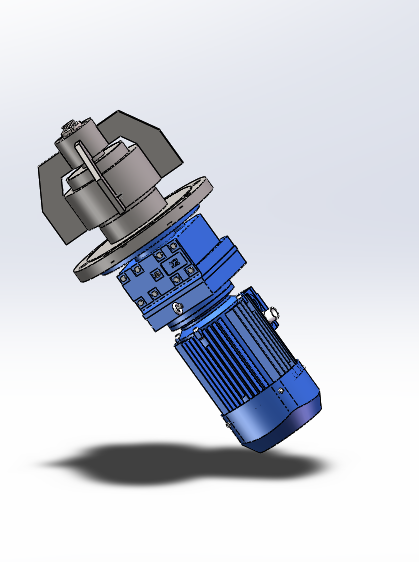

Magnetic Agitators Vs Traditional Mixers for Industrial Applications
When deciding between magnetic agitators and traditional mixers, it's essential to consider the pros and cons of magnetic agitators versus traditional mixers in relation to your process goals and the materials you use. Magnetic agitators excel at mixing thin liquids or maintaining movement in a susp
Read More