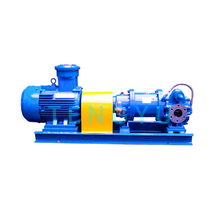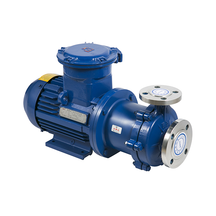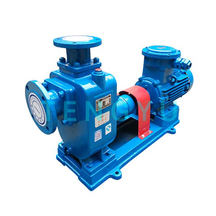
Chemical processing environments operate under incredibly high stakes. Fugitive emissions, toxic leaks, and severe EPA fines present constant threats to operational stability. Traditional shaft seals are the primary vulnerability in fluid transfer systems. They create unavoidable leak paths requiring constant maintenance. Upgrading to a chemical pump with a magnetic drive eliminates this risk completely. However, applying this technology incorrectly merely shifts the failure point. Ignoring solid limits or misaligning system curves destroys internal bearings or magnetic couplings. We must adopt a strict, engineering-led framework to evaluate and size these systems. This guide walks you through specifying the correct equipment for your facility's unique hazardous fluid requirements. You will learn how to navigate operational limits, assess material science, and mitigate catastrophic implementation risks.
Strict operational limits apply: Standard mag drive units cannot tolerate dry running or fluids containing more than 1.5% solids (or particles larger than 70 microns).
Material science is the primary variable: Selecting the right containment shell (non-conductive polymers vs. alloys) prevents eddy current heat buildup and protects against temperatures exceeding magnet Curie points.
System curves dictate survival: Preventing cavitation (NPSHa > NPSHR) and magnetic decoupling requires exact Total Dynamic Head (TDH) calculations with a 10–20% safety margin.
Transitioning from sealed architectures makes clear financial and regulatory sense. Facilities handling toxic or flammable media face strict environmental compliance mandates. Zero downtime directly protects your bottom line. Eliminating mechanical seals removes your biggest leak liability. You protect workers from dangerous chemical exposure. You also shield your facility from severe regulatory penalties. Maintenance teams spend less time repairing damaged seal faces. Production runs continuously without unexpected fluid containment emergencies.
Magnetic drive technology is not a universal fix. We must recognize scenarios where standard units fail completely.
Standard designs require extremely clean fluids. They are highly vulnerable to abrasive solids. Solid particles get trapped in the narrow clearances between the inner magnet and the containment shell. The absolute baseline limit restricts solids to less than 1.5% concentration. Particle sizes must remain strictly under 70 microns. If you pump heavy slurries, the internal bearings will grind and shatter quickly.
Viscosity also dictates pump viability. High-viscosity fluids demand significantly increased torque. Thick liquids create massive shear stress inside the pump casing. If the fluid is too thick, the magnetic coupling struggles to spin the impeller. This causes magnetic slip, widely known as decoupling. You must upsize the magnetic drive properly to handle thicker liquids. Otherwise, the motor spins freely while the impeller stalls completely.
The sealless centrifugal pump remains the dominant industry standard. It handles the vast majority of continuous, clean-chemical transfer applications. It excels in low-viscosity, high-volume operations. You will see these units handling bulk acid transfer, water treatment, and solvent circulation. They offer simple operation and reliable continuous flow.
Sometimes, centrifugal units fall short. We introduce sliding vane or internal gear magnetic drive pumps to solve specific operational hurdles. Positive displacement (PD) units operate differently. They capture discrete volumes of fluid and force them through the discharge port.
You should choose positive displacement units when applications require bidirectional flow. Bidirectional capability is essential for line stripping. Line stripping recovers expensive or hazardous chemicals left in the piping network. PD units handle entrained air effortlessly without vapor locking. They also manage highly viscous fluids easily. Centrifugal efficiency drops sharply as viscosity increases. This makes PD the superior choice for syrups, resins, or heavy oils.
Operational Requirement | Centrifugal Magnetic Drive | Positive Displacement (PD) Magnetic Drive |
|---|---|---|
Flow Volume | High volume, continuous flow. | Precise, measured, low-to-medium flow. |
Fluid Viscosity | Best for thin, water-like liquids. | Excels with thick, high-viscosity liquids. |
Flow Direction | Strictly unidirectional. | Bidirectional capabilities (line stripping). |
Entrained Air Handling | Prone to vapor locking and cavitation. | Handles air easily without stalling. |
Calculate true Total Dynamic Head (TDH) accurately. You must account for all system friction losses. Include piping runs, elbows, valves, and elevation changes. We recommend adding a 10–20% safety margin to flow and head requirements. Be careful not to severely oversize the unit. Severe oversizing pushes the equipment off its Best Efficiency Point (BEP). Operating off the BEP causes excessive vibration and premature bearing wear.
Map the Net Positive Suction Head (NPSH) meticulously. Ensure your NPSHa (available) strictly exceeds the NPSHR (required). This prevents localized boiling, known as cavitation. Cavitation bubbles implode with immense force. They destroy internal plastic or ceramic components rapidly. Proper suction line sizing prevents this destructive phenomenon.
Differentiate between standard plastics and advanced materials carefully. Specifying a corrosion resistant pump requires matching the wet-end material exactly to the chemical concentration.
Wet-End Material | Typical Chemical Applications | Approximate Thermal Limit |
|---|---|---|
PP (Polypropylene) | General acids, alkalis, water treatment. | Up to 80°C - 90°C |
PVDF (Polyvinylidene Fluoride) | Stronger acids, halogens, mild solvents. | Up to 90°C - 100°C |
PTFE / PFA (Fluoropolymers) | Aggressive solvents, highly corrosive acids. | Up to 150°C |
Hastelloy / Alloy C | Extreme corrosives under high pressure. | Often exceeds 150°C |
Magnets have strict physical limits. The Curie point dictates maximum thermal exposure. If media temperature or dead-heading friction exceeds these limits, neodymium magnets permanently demagnetize. The magnetic coupling fails entirely. You will need a complete pump rebuild.
Metallic containment shells can induce eddy currents. A spinning magnetic field intersects the stationary metal shell. This induces voltage, creating tiny current loops. These loops generate significant heat. They cause measurable energy loss. We assess non-conductive containment shell materials to solve this problem. Carbon-fiber-reinforced PFA or engineered ceramics eliminate eddy current heat entirely. This choice maintains thermal stability. It also maximizes magnetic efficiency and reduces motor power consumption.
Evaluate external installation realities carefully. You might need ATEX compliance for explosive atmospheres. ATEX environments require specific grounding and spark-free materials. Outdoor ambient temperature extremes can warp plastics or freeze fluids. Sunshades or heat tracing might be necessary. Footprint constraints often dictate pump geometry. Ensure sufficient clearance around the pump for future maintenance and ventilation.
Dry running is the ultimate operational failure. It causes catastrophic damage almost immediately. Internal components, like Silicon Carbide bearings, rely entirely on the pumped fluid. The fluid provides essential lubrication and cooling. Without fluid, dry running generates intense friction. This friction causes these critical parts to shatter in seconds to minutes. The resulting damage is highly expensive to repair.
You must integrate protective safeguards into your system loop. Install power monitors, flow switches, and IoT vibration sensors. Frame these instruments as mandatory insurance policies. A power monitor measures true motor power continuously. It trips the motor instantly when power drops during a dry run. It also trips during an overload condition. These safeguards protect your capital investment. They prevent disastrous breakdowns and costly process interruptions.
Operational errors easily exceed the magnetic coupling's maximum torque. Starting the pump with a closed discharge valve is a very common mistake. This sudden resistance causes the magnets to slip. The impeller stalls while the motor keeps turning. This generates massive heat rapidly. It can permanently damage the magnetic field and melt internal plastic casings. Operators must follow strict startup sequencing to prevent decoupling.
Provide a strict framework for procurement teams. Calculate the initial capital expenditure of the magnetic drive pump alongside necessary instrumentation. Compare this initial cost against historical five-year maintenance expenses of standard sealed units. Include mechanical seal replacements, flush water utilities, and unplanned downtime in your calculations. This long-term value assessment justifies the higher initial investment to financial stakeholders.
Advise buyers to scrutinize manufacturers closely. Ensure they provide certified performance curves for every unit. Demand complete material traceability reports (MTRs) for critical components. Check their capacity for post-installation technical support. Ensure they can assist with smart-monitoring integration. Reliable vendors offer comprehensive troubleshooting guidance.
Gather MSDS (Material Safety Data Sheets) for all pumped chemicals. You must know the exact specific gravity and vapor pressure. Establish precise suction-side piping isometric drawings. Note every elbow and valve carefully. Complete these technical steps before requesting final quotes. This thorough preparation ensures accurate sizing and perfect material selection from application engineers.
Specifying the correct equipment is a direct investment in facility safety and environmental compliance.
The pump is only as reliable as the system surrounding it. Proper sizing, strict filtration, and dry-run protection remain non-negotiable.
Eliminating mechanical seals removes the primary leak path, ensuring continuous process reliability.
Always engage with a certified pump application engineer to audit your specific system curve and chemical compatibility matrix.
A: No. Standard units strictly require clean liquids. The absolute baseline limits are 1.5% solids by concentration and a maximum particle size of 70 microns. Heavy solids get trapped between the inner magnet and containment shell. This grinds and shatters the internal bearings. Upstream filtration is mandatory if your fluid contains abrasives.
A: Dry running causes catastrophic failure rapidly. Internal bearings, typically made of Silicon Carbide, rely on the fluid for lubrication and cooling. Without it, friction generates immense heat. This causes internal components to shatter within seconds to minutes. Always install power monitors to prevent this.
A: Excessive temperatures can push neodymium magnets past their Curie point. This physics threshold causes the magnets to permanently lose their magnetic properties. You must strictly monitor fluid temperatures and avoid dead-heading the pump to prevent fatal overheating and magnetic decoupling.
A: While the initial capital expenditure is higher, long-term operational costs are significantly lower. They eliminate mechanical seal replacements, flush water utilities, and costly leak penalties. Using non-conductive containment shells also eliminates eddy-current energy losses, which improves overall electrical efficiency.