Managing process fluids often presents severe engineering challenges. You frequently face strict spatial constraints. Furthermore, low Net Positive Suction Head available (NPSHa) adds significant complexity to system design. Traditional horizontal units simply fail under these restricted environmental conditions. Enter the API 610 vertical pump. It serves as the definitive industry standard solution. Heavy-duty operations rely on it heavily for wet-pit and closed-system applications.
Selecting a vertically suspended pump requires careful system evaluation. Engineers must balance upfront installation advantages against long-term maintenance requirements. Dynamic stability also demands intense scrutiny during the specification phase. This guide explores the critical design mechanics behind these vertical units. We break down the operational benefits and examine core industry applications. You will learn how to specify the right hydraulic configuration for your unique site limitations.
VS type pumps solve severe NPSH limitations by submerging the first-stage impeller, eliminating complex priming systems.
API 610 categorization (VS1 through VS7) dictates specific structural designs, ranging from single-casing diffuser pumps to double-casing configurations.
While they offer a significantly reduced topside footprint, vertically suspended pumps require rigorous vibration and critical speed analysis during the specification phase.
Understanding the core structure helps engineers apply these units effectively. The American Petroleum Institute established precise guidelines for vertical pumps. API 610 defines specific categories based on hydraulic and mechanical layouts. We map these subtypes below to clarify their technical boundaries.
You can divide these machines into three distinct structural families. Each family serves a highly specific environmental condition.
Category | API 610 Designations | Primary Structural Design |
|---|---|---|
Single-Casing (Wet-Pit) | VS1, VS2, VS3 | Submerged discharge designs utilizing diffuser, volute, or axial flow hydraulics. |
Single-Casing (Sump) | VS4, VS5 | Line-shaft and cantilevered designs optimized for shallow to medium basin drainage. |
Double-Casing (Closed System) | VS6, VS7 | "Can" or barrel pumps built for high-pressure, low-NPSH closed-loop systems. |
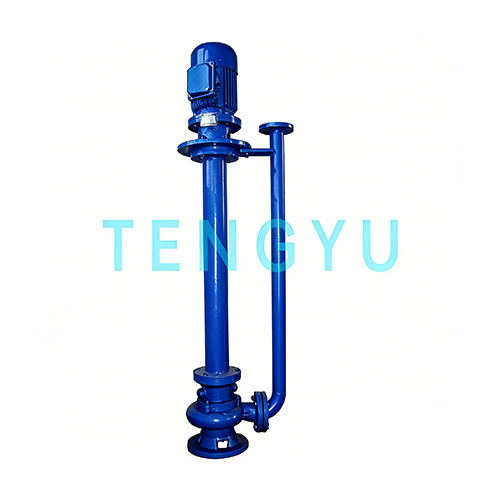
The architecture relies on a strict physical separation of components. The driver and discharge head remain safely above ground. We call this the topside assembly. Meanwhile, the hydraulic wet end sits submerged below grade. This split arrangement protects the electric motor from hazardous process fluids. It also simplifies electrical routing and instrumentation access.
The column pipe connects the top and bottom sections. It acts as both a structural support and a fluid conduit. Inside this pipe sits the line shaft. The shaft transmits torque from the surface motor down to the impellers. Line-shaft bearings stabilize this long rotating component. They manage radial thrust and prevent excessive deflection. Without proper bearing support, a suspended centrifugal pump would experience catastrophic vibration failures.
These units deliver substantial advantages over standard horizontal configurations. Their unique vertical orientation solves several common pipeline engineering headaches.
System designers constantly battle cavitation. Cavitation occurs when NPSHa drops below the pump's required threshold (NPSHr). You typically need elevated source tanks to fix this. Alternatively, you might dig massive trenches to lower horizontal pumps. Both options cost massive amounts of capital. A VS type pump solves this naturally. It lowers the suction impeller below grade. Plunging the first stage deep into the fluid automatically increases static pressure. This physically boosts NPSHa and eliminates cavitation risks without expensive civil works.
Surface space is highly valuable in processing facilities. Horizontal pumps require extensive baseplates. Their horizontal motors stretch across the concrete pad. This consumes premium real estate. Vertical units shift the entire mechanical footprint upward. Only the discharge head and vertical motor occupy the surface level. This allows you to install multiple high-capacity units tightly together. It frees up critical walkways and simplifies piping layouts.
Many process systems require immediate fluid delivery during emergencies. Firewater loops and cooling circuits cannot wait for vacuum priming. Vertical pumps keep their hydraulic components permanently submerged. The liquid naturally floods the impeller casing. This guarantees immediate operational readiness. You never need auxiliary vacuum priming systems. The permanent submergence ensures absolute reliability during critical safety scenarios.
System demands often change over a plant's lifecycle. Upgrading a horizontal unit usually means buying an entirely new casing. Vertical configurations offer modular adaptability.
Stage Addition: You can stack additional impellers (bowls) onto a VS1 or VS6 unit.
Head Increase: Adding bowls linearly increases the total discharge head.
Footprint Retention: The surface footprint remains exactly the same.
Cost Efficiency: You only modify the submerged wet end, saving structural costs.
Industrial sectors leverage vertical structures to handle hazardous and critical tasks safely. Let us examine three primary application environments.
Refineries produce hazardous waste streams. Leaks, wash-downs, and process drains collect in underground basins. Operators deploy the VS4 and VS5 configurations heavily here. They act as a reliable sump pump for refinery closed-drain networks. The API 610 standard mandates strict material compliance for these environments. The wet end must withstand highly corrosive, volatile hydrocarbons. It must also resist damage from particulate-laden sludges. Operators rely on robust line-shaft bearings to maintain stability while moving these dirty fluids back into the treatment loop.
Aggressive acids and caustic solutions require specialized handling. Facilities store these fluids in deep underground tanks for safety. You need a specialized vertical chemical pump to transfer them safely. Engineers must focus heavily on custom metallurgy here. Standard carbon steel fails quickly in sulfuric acid. Designers specify Duplex stainless steel or Alloy 20 to ensure longevity. Furthermore, vapor-tight seal arrangements are mandatory. Toxic vapors cannot escape up the column pipe. Advanced dry-gas seals protect the topside environment and ensure strict environmental compliance.
Offshore platforms face extreme spatial limits and harsh saline atmospheres. Vertical units handle ballast water management and seawater lift duties. These applications introduce unique mechanical constraints. Wave-induced vessel motion creates aggressive lateral forces. The suspended column must possess extreme structural rigidity. High-strength casing materials prevent deflection during severe storms. Additionally, the saline environment demands highly corrosion-resistant materials like Super Duplex to prevent rapid degradation.
Selecting the correct pump topology dictates system reliability. You must weigh the structural trade-offs against your specific operational constraints.
Overhung (OH) horizontal units dominate standard transfer duties. They utilize a simple pull-back design. This makes OH units incredibly easy to maintain. Maintenance crews can remove the rotor without disturbing the piping. However, OH configurations fail when NPSHa is severely limited. They also fail when the fluid source sits deep underground. In these scenarios, you must specify a vertical unit. The vertical unit physically overcomes the hydraulic limitations. It trades maintenance simplicity for guaranteed hydraulic performance.
Between Bearings (BB) pumps handle massive flow rates and extreme pressures. Their rotors sit supported at both ends. This offers superior dynamic stability for heavy-duty, continuous processes. You also get easier access to the bearing housings. However, BB units require massive horizontal real estate. If your plant geometry strictly forbids a large footprint, you need an alternative. A API 610 VS pump, specifically the VS6 double-casing design, provides the solution. The VS6 delivers the high-pressure handling of a BB unit but packages it into a compact vertical "can". It fits seamlessly into tight pipeline geometries.
Engineers must evaluate several operational dimensions before finalizing equipment selection. The following baseline compares fundamental engineering impacts.
Evaluation Dimension | Vertical Suspended (VS) | Horizontal Units (OH / BB) |
|---|---|---|
Civil Engineering Effort | Low. Requires minimal pad size. Can utilizes existing sumps or narrow pits. | High. Requires large concrete foundations and extensive leveling pads. |
NPSH Handling | Excellent. Submergence naturally boosts NPSHa. | Limited. Requires elevated tanks or boosters. |
Maintenance Complexity | High. Requires overhead cranes to pull the entire column assembly for service. | Low to Medium. Allows direct access to bearing housings and seals. |
Alignment Stability | Sensitive. Long shafts require precise bearing alignment to prevent vibration. | Robust. Short shafts mitigate deflection and resonance risks. |
Vertical machines introduce unique mechanical vulnerabilities. You must proactively engineer solutions during the specification phase to prevent premature failure.
The extended shaft length creates the primary vulnerability. A long, suspended rotor naturally wants to deflect. Shaft elongation occurs due to thermal expansion and hydraulic thrust. Engineers must calculate exact critical speed margins. The machine's operating speed must never align with its natural Reed frequency. If resonance occurs, the entire column will shake violently. API 610 testing protocols mandate strict vibration limits. Manufacturers must perform rigorous finite element analysis (FEA). This confirms the structural stiffness of the discharge head and motor stand before fabrication.
Line-shaft bearings sit submerged inside the column pipe. They stabilize the rotating shaft. In VS1 and VS4 designs, these bearings rely on the pumped fluid for lubrication. We call this an open product-lubricated shaft. This works perfectly for clean water. However, if the fluid contains abrasive particulates, the bearings wear out rapidly. Pumping abrasive slurries requires a different approach. You must specify an enclosed tube oil-lubricated shaft. A protective tube isolates the shaft and bearings from the process fluid. Clean oil or water flushes down the tube. This guarantees clean lubrication but adds mechanical complexity to the system.
Material selection dictates operational lifespan. You cannot guess the fluid properties. API 610 categorizes materials into specific classes. For example, Class S-6 covers standard carbon steel. Class C-6 covers specialized stainless alloys. Class A-8 designates robust austenitic stainless steels. You must evaluate fluid corrosivity and temperature extremes. If your process involves sour gas or hydrogen sulfide (H2S), strict NACE compliance is mandatory. Hardness restrictions apply to all wetted components. Ignoring these metallurgical requirements leads to rapid stress corrosion cracking and catastrophic failure.
The physical constraints of your facility dictate your pumping technology. When footprint is severely restricted, vertical units excel. They conquer severe NPSH limitations effortlessly. By submerging the hydraulic wet end, they provide immediate operational readiness and hydraulic stability.
You must approach the specification process methodically. Compile precise site data before you engage any equipment vendors. Measure your exact NPSHa carefully. Analyze the exact fluid properties, including temperature and specific gravity. Identify the maximum allowable suspended solids in your process stream. These details drive the metallurgical and lubrication decisions.
Do not leave rotor dynamics to chance. Always demand thorough vibration modeling. We advise you to contact technical sales experts early in your project timeline. Request a custom hydraulic evaluation and a comprehensive rotor dynamic analysis. Procuring the right specification sheet now prevents disastrous mechanical failures later.
A: A VS4 pump utilizes a long line-shaft supported by submerged bearings to drive the impeller. It can reach significant sump depths. A VS5 is a cantilevered pump. Its shaft has no submerged bearings. The robust topside bearings support the entire overhung shaft. This limits the VS5 to relatively shallow depths but makes it highly resistant to abrasive fluids.
A: Generally, no. Most vertical units rely on the pumped fluid to lubricate their submerged line-shaft bearings. Running them dry causes immediate frictional heat and catastrophic bearing failure. However, specialized cantilever designs (VS5) or those utilizing external flush systems on enclosed shaft tubes can survive brief dry-running scenarios. Always verify seal arrangements before operating without fluid.
A: Maintenance requires significant vertical clearance. You must use an overhead crane to lift the motor away first. Then, you pull the discharge head, column pipe sections, and the entire bowl assembly straight up out of the pit or casing. This pull process grants you access to the submerged wet end and line-shaft bearings for repair.
A: A VS6 is a double-casing, vertically suspended diffuser pump. It features an outer barrel, or "can," that encloses the inner pump assembly. The process fluid enters this outer can, flows down to the bottom, and enters the first-stage impeller. This design artificially lowers the suction point, creating high static pressure to satisfy extreme low-NPSH demands in closed systems.