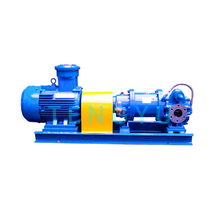
Pumps are essential in industries like chemical, pharmaceutical, and water treatment, where they transfer fluids and maintain system efficiency. Choosing the right pump is crucial for optimizing performance and ensuring safety. Magnetic drive pumps and centrifugal pumps are two widely used types, each with its own advantages.
Magnetic drive pumps are ideal for handling hazardous or corrosive fluids, offering leak-free operation due to their magnetic coupling. This makes them essential in industries requiring strict safety standards. On the other hand, centrifugal pumps are known for their simplicity and high flow capacity, making them perfect for general applications like water treatment and fluid transfer.
This article will compare magnetic drive pumps and centrifugal pumps, highlighting their features, applications, and benefits to help you choose the best pump for your needs.
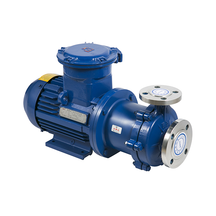
A magnetic drive pump is a type of pump that uses magnetic coupling to transfer motion from the motor to the impeller without any direct physical contact. The pump consists of two magnetic components—one attached to the motor shaft and the other to the impeller. As the motor shaft rotates, the magnetic field created by the motor magnets drives the impeller, causing the fluid to move. This design eliminates the need for traditional shaft seals, offering a significant advantage in preventing leakage and contamination.
Hermetically Sealed: Magnetic drive pumps are fully sealed, which means that there is no direct contact between the fluid and the external environment. This feature is particularly useful when handling hazardous or toxic fluids.
No Shaft Seal: Unlike traditional pumps, magnetic drive pumps do not use shaft seals, which reduces the risk of leaks and ensures safe and efficient fluid handling. The absence of seals also eliminates common problems like seal wear and failure.
Ideal for Hazardous Fluids: Magnetic drive pumps are designed to handle corrosive, toxic, or hazardous fluids with ease, making them ideal for industries that require high safety standards.
Magnetic drive pumps are commonly used in industries where leakage prevention is a critical concern, such as:
Pharmaceuticals: Used for handling delicate and hazardous chemicals in drug manufacturing processes.
Chemicals: Ideal for transferring toxic or corrosive liquids, where safety and contamination control are essential.
Wastewater Treatment: Used to pump harsh chemicals and waste fluids while preventing environmental contamination.
These pumps are also suitable for various other industries requiring leak-proof, contamination-free fluid handling, such as food processing, semiconductor manufacturing, and petrochemical industries.
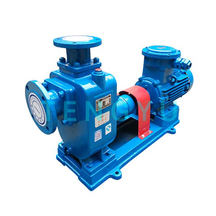
A centrifugal pump is a type of pump that uses rotational energy to move fluid through a system by creating centrifugal force. The pump consists of an impeller that rotates inside a casing, which imparts kinetic energy to the fluid. As the impeller spins, the fluid is pushed outward toward the pump's discharge, creating pressure and moving the fluid through pipes or tubes. This simple mechanism makes centrifugal pumps one of the most commonly used types in various fluid handling applications.
Simplicity in Design: Centrifugal pumps are known for their straightforward design, which includes fewer moving parts compared to other pump types. This makes them easy to operate and maintain.
High Flow Rates: These pumps are capable of moving large volumes of fluid at relatively high flow rates, making them ideal for applications that require the transfer of fluids quickly and efficiently.
Versatility: Centrifugal pumps can be used for a wide range of fluids, including water, chemicals, and oils, as well as for both low and high-pressure applications.
Centrifugal pumps are widely used across multiple industries for general fluid transfer and circulation. Some key applications include:
Cooling Systems: Used in HVAC and industrial cooling systems to circulate water or coolant.
Water Pumping: Commonly used in municipal water supply systems, irrigation, and sewage treatment.
Fluid Transfer: Used in chemical, pharmaceutical, and food industries to transport liquids between processes, tanks, and storage.
Magnetic Drive Pumps: These pumps use magnetic fields to transfer motion from the motor to the impeller, without the need for direct physical contact. This design eliminates the use of shaft seals, making them ideal for handling hazardous or corrosive fluids without the risk of leakage.
Centrifugal Pumps: Centrifugal pumps rely on mechanical seals to prevent fluid leakage. The impeller rotates to generate centrifugal force, pushing the fluid outward through the pump casing. Mechanical seals are necessary to contain the fluid and prevent leakage.
Magnetic Drive Pumps: Due to the seal-less design, magnetic drive pumps offer superior leakage control. This makes them the go-to choice for applications where leakage of hazardous, toxic, or corrosive fluids is a concern, such as in the chemical, pharmaceutical, and wastewater industries.
Centrifugal Pumps: While centrifugal pumps can effectively handle a wide range of fluids, they require mechanical seals, which can wear over time, potentially leading to leakage. Therefore, leakage control is not as robust as in magnetic drive pumps.
Magnetic Drive Pumps: These pumps excel in specific, smaller volume applications. They are ideal for environments where leakage prevention is crucial, but they are typically less efficient than centrifugal pumps in terms of handling high-flow rates.
Centrifugal Pumps: Generally more energy-efficient for high-flow applications due to their simple design and ability to handle large volumes of fluid with lower energy consumption. These pumps are often preferred for tasks involving significant fluid volumes, like water pumping or industrial fluid transfer.
Magnetic Drive Pumps: With no shaft seals and fewer moving parts, magnetic drive pumps require less maintenance. Their design reduces wear and tear, especially in demanding applications, leading to lower operating costs and longer lifespan.
Centrifugal Pumps: Since centrifugal pumps rely on mechanical seals, they may require regular maintenance to check and replace seals. The seals are subject to wear and can cause fluid leakage if not maintained properly.
Magnetic Drive Pumps: Due to their specialized design, including magnetic couplings and seal-less technology, magnetic drive pumps are typically more expensive than centrifugal pumps. The higher cost is offset by their superior leakage control and reduced maintenance needs.
Centrifugal Pumps: These pumps are generally more affordable, making them a cost-effective option for general fluid handling applications where leakage control is not a primary concern.
Fluid Type:
Magnetic Drive Pumps: Ideal for corrosive, toxic, or hazardous fluids where leakage prevention is essential.
Centrifugal Pumps: Suitable for non-hazardous fluids, with mechanical seals that may not be ideal for dangerous liquids.
Flow Rate and Pressure:
Magnetic Drive Pumps: Best for smaller volumes with moderate flow requirements.
Centrifugal Pumps: Efficient for high-flow applications and large-scale fluid transfer.
Leakage Concerns:
Magnetic Drive Pumps: Excellent for preventing leakage, ideal for sensitive environments.
Centrifugal Pumps: Suitable for general use where leakage is less critical.
Budget:
Magnetic Drive Pumps: Generally more expensive but reduce long-term maintenance and leakage risks.
Centrifugal Pumps: More affordable for high-flow, general-purpose applications.
Magnetic drive pumps are the ideal choice when leakage control is a top priority, particularly in applications where hazardous, toxic, or corrosive fluids are being handled. Their seal-less design ensures that there are no leaks, which is crucial in industries like chemical processing, pharmaceutical manufacturing, and wastewater treatment. In these sectors, even the smallest leak could result in environmental hazards, safety risks, or product contamination. Magnetic drive pumps provide a reliable solution for these sensitive applications, ensuring safe, leak-free operation and minimizing the risks associated with hazardous fluids.
Centrifugal pumps are best suited for high-flow applications where large volumes of fluid need to be transferred efficiently. They are commonly used in general-purpose fluid handling tasks, such as water pumping, cooling systems, and irrigation systems. These pumps are ideal for environments where leakage control is not as critical, and cost-efficiency and simplicity of operation are more important. Centrifugal pumps are typically used in industries that deal with non-hazardous fluids and require high throughput. Their easy maintenance, reliable performance, and ability to handle large volumes of fluid make them a versatile and cost-effective option for many industrial applications.
Magnetic drive pumps typically handle lower flow rates compared to centrifugal pumps. While they excel in smaller volume applications, centrifugal pumps are better suited for high-flow tasks, such as in water treatment or industrial cooling.
Magnetic drive pumps are generally less energy-efficient for high-flow applications. Centrifugal pumps, with their simpler design, are typically more energy-efficient for handling large volumes of fluid.
Magnetic drive pumps require less maintenance due to the absence of mechanical seals. In contrast, centrifugal pumps need regular maintenance on seals and bearings, which are prone to wear over time.
Magnetic drive pumps can handle moderate temperatures, but centrifugal pumps are often better for high-temperature applications, as they are designed with materials to withstand extreme heat.
In summary, both magnetic drive pumps and centrifugal pumps offer unique advantages depending on the application. Magnetic drive pumps excel in leakage control, handling hazardous fluids, and low-to-moderate flow rates, making them ideal for industries like chemicals and pharmaceuticals. However, they may not be as energy-efficient or suited for high-flow or high-temperature applications compared to centrifugal pumps. On the other hand, centrifugal pumps are more energy-efficient, better for high-flow applications, and more widely used in general fluid handling. However, they require regular maintenance due to their reliance on mechanical seals and bearings.
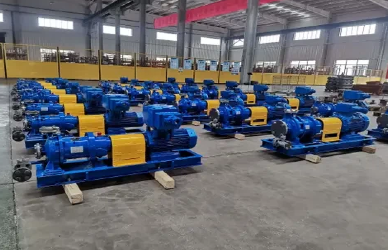
When choosing between these two pump types, consider factors like fluid type, flow requirements, maintenance capabilities, and budget to determine the best fit for your specific needs. Each pump serves its purpose, and understanding these key differences will ensure the best performance and longevity for your fluid handling systems.