Magnetic drive pumps offer absolute leak-free security for dangerous and volatile fluids. However, their tight internal tolerances remain highly vulnerable to sudden environmental changes. Magnetic couplings also face severe threats from extreme temperature fluctuations and heat-inducing eddy currents. Engineers often struggle to balance this zero-leakage security with internal thermal stability.
A jacketed magnetic drive pump serves as a specific structural upgrade to solve this conflict. It actively controls internal thermal environments during operation. You need this technology to prevent catastrophic failures like demagnetization, bearing destruction, and fluid solidification. Proper thermal management keeps your production lines running smoothly.
This guide provides chemical processing and maintenance engineers with a clear, evidence-based framework. You will learn when to specify a jacketed design as a mandatory capital investment. We will explore operational triggers, compare alternative technologies, and outline critical system safeguards. You can then confidently maximize your equipment reliability and safety.
Standard magnetic pumps generate internal heat and rely on the process fluid for cooling; extreme ambient or fluid temperatures disrupt this balance.
Upgrading to a jacketed design is non-negotiable when pumping fluids prone to crystallization, as solidified particles will rapidly destroy internal silicon carbide (SiC) bearings.
Proper evaluation requires analyzing not just the pump, but the jacket media (steam/water/oil) control systems to avoid accidental thermal shock.
Standard chemical magnetic pumps often fail unexpectedly under extreme thermal conditions. This operational instability leads to sudden downtime and highly expensive repair costs. We must examine why a standard chemical magnetic pump struggles with heat management. The root cause lies in its fundamental sealing mechanism.
Magnetic couplings spin vigorously across a stationary metallic containment shell. This continuous magnetic movement generates innate heat through electrical eddy currents. The process fluid must act as a coolant to absorb this generated heat. The pump overheats quickly if the fluid cannot absorb this thermal load. This happens if the liquid is already too hot or if suction flow is restricted.
We must also address the severe threat of magnetic demagnetization. Standard neodymium magnets possess strict physical temperature limits. You risk permanent damage if internal heat exceeds these specific thresholds. Exceeding the Curie temperature leads to a permanent loss of magnetic strength. This causes inevitable decoupling during operation. The motor turns normally, but the internal impeller remains completely stationary.
Furthermore, extreme temperatures compromise vital internal elastomers and clearances. Both extreme hot and cold environments degrade standard O-ring integrity. They also alter the microscopic clearances between ceramic shafts and bearings. You face an elevated risk of mechanical binding when thermal expansion shrinks these tight clearances.
Ignoring the cumulative heat generated by internal eddy currents during continuous operation.
Failing to monitor the actual temperature of the fluid directly inside the containment shell.
Using standard neodymium magnets in processes that frequently exceed 120°C.
Overlooking the thermal expansion rates of different internal ceramic and metallic components.
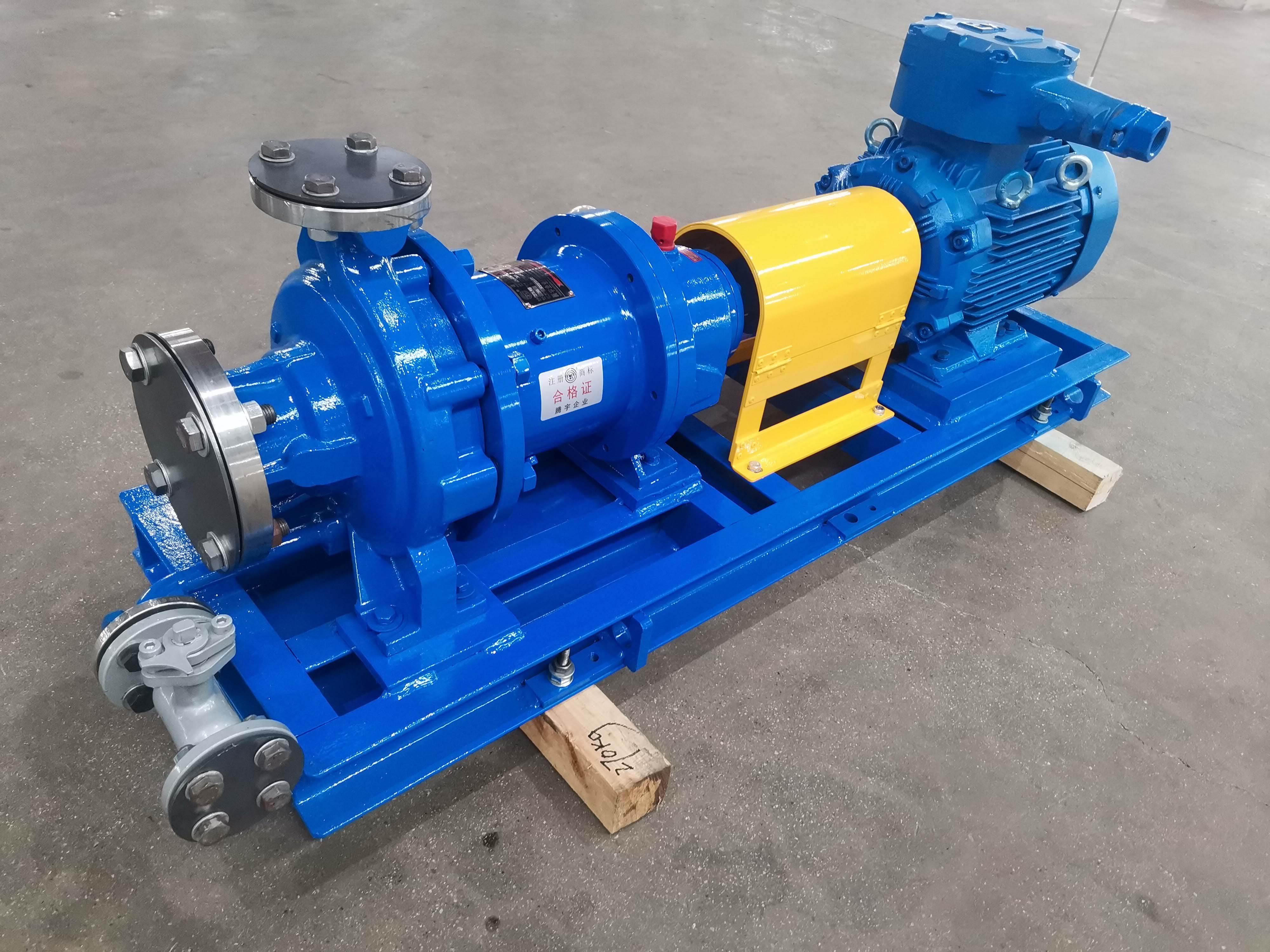
Engineers developed specialized architectures to combat these persistent thermal vulnerabilities. A modern heating cooling jacket pump integrates a secondary outer cavity. We refer to this cavity as the thermal jacket. It carefully surrounds critical internal components like the pump casing, containment shell, or bearing housing.
This innovative solution architecture enables highly active thermal regulation. You circulate a dedicated heat transfer fluid directly through the jacket. Facilities commonly use industrial steam, thermal oil, or chilled water for this task. This continuous circulation maintains a strictly controlled internal temperature. The pump operates reliably and remains entirely independent of the surrounding ambient environment.
We must clearly distinguish between the different targeted jacketing zones available. Manufacturers design casing jackets primarily to keep the process fluid perfectly fluidic. These jackets stop liquids from freezing or thickening inside the volute. Conversely, engineers utilize containment shell jackets for a completely different purpose. These rear-mounted jackets actively dissipate the intense heat generated by eddy currents.
Implementing targeted zones ensures that you address the exact thermal threat facing your process. You avoid over-engineering the system while securing maximum operational safety. Active thermal regulation transforms a fragile magnetic drive into a robust processing tool.
You must map specific fluid features to desired operational outcomes when selecting equipment. Evaluating decision criteria helps you justify the initial capital expenditure. We have identified four primary operational triggers that make a jacketed design absolutely necessary.
Certain fluids present massive risks when their temperatures drop unexpectedly. These include liquid sulfur, caustic soda, and specific industrial polymers. These substances solidify or become highly viscous during brief system pauses. Crystallization introduces hard solids directly into the tight internal bearing clearances.
A crystallization magnetic pump effectively mitigates this severe risk. It uses a robust heating jacket to maintain constant fluidity. This continuous heating prevents instantaneous and catastrophic bearing failure upon equipment startup. You completely avoid the expensive damage caused by solid particle grinding.
Many chemical plants require pumping aggressive chemicals well above 150°C (300°F). Handling such extreme heat exceeds the safety margins of standard equipment. High temperatures quickly degrade standard magnetic alloys and weaken sealing elastomers. The risk of sudden catastrophic leakage increases exponentially.
A high temperature magnetic pump provides the necessary engineering safeguards. It pairs an active cooling jacket with upgraded samarium cobalt magnets. This specific combination prevents dangerous thermal decoupling. It also significantly extends the operational life of standard metallic isolation shells.
Pharmaceutical and specialty chemical processes often operate under very strict thermal limits. Even minor fluid temperature deviations can ruin an entire production batch. Standard pumps lose significant heat through their exposed casings into the ambient environment. This uncontrolled heat loss directly impacts your final product quality.
A thermal insulation magnetic pump acts as a reliable temperature stabilizer. It compensates precisely for the heat lost through the pump casing. The internal fluid temperature remains perfectly stable throughout the entire transfer process. You maintain strict quality control and eliminate expensive batch rejections.
Cryogenic transfers or extreme cold-weather outdoor installations present unique freezing challenges. Extreme cold heavily compromises standard elastomer flexibility and resilience. O-rings become brittle and lose their ability to maintain a tight seal. This creates a severe environmental hazard in hazardous chemical applications.
We avoid this risk by utilizing a targeted warming jacket. The jacket ensures the casing O-rings retain their necessary physical elasticity. They maintain the critical hermetic seal despite freezing ambient conditions. You secure long-term reliability for outdoor winter operations.
Choosing the correct fluid handling technology requires balanced and realistic comparisons. You must evaluate mechanical seal pumps, canned motor pumps, and jacketed magnetic drives objectively. Each technology offers distinct advantages and operational drawbacks.
Mechanical seal pumps remain the traditional standard in many industrial processing facilities. They rely on complex physical seals to keep fluids contained. You must frequently install expensive API seal flush support systems to cool these seals.
Pros: Jacketed magnetic pumps have absolutely no mechanical seals to fail over time. They guarantee zero fugitive emissions. They also eliminate the need for complex, expensive seal flush support systems entirely.
Cons: Magnetic drives demand a higher initial capital expenditure. They are also notoriously unforgiving of dry running conditions. They handle high solid content poorly compared to heavy-duty mechanical seal alternatives.
Canned motor pumps enclose both the pump and motor within a single sealed unit. The pumped fluid often flows directly through the motor cavity to cool the internal stator. This design eliminates the magnetic coupling entirely.
Pros: Canned motor pumps are sometimes easier to service rapidly on-site. You can separate the motor without breaking the primary pressure boundary. They also demonstrate slightly better tolerance for minor fluid aeration during transfer.
Cons: Standard CMPs do not suffer from eddy current coupling losses. However, their internal motor stators remain highly vulnerable to high heat. Jacketed mag drives often prove superior for purely high-temperature hazardous fluid isolation.
Feature | Jacketed Mag Drive Pump | Mechanical Seal Pump | Canned Motor Pump |
|---|---|---|---|
Leakage Risk | Zero (Hermetically Sealed) | Moderate to High over time | Zero (Hermetically Sealed) |
High Temp Tolerance | Excellent (with cooling jacket) | Good (requires complex flush) | Poor (stator insulation risks) |
Solids Handling | Poor (requires clean fluid) | Good (depending on seal type) | Poor to Moderate |
Maintenance Complexity | Low (fewer moving parts) | High (frequent seal replacements) | Moderate (specialized repairs) |
Proper field implementation requires meticulous planning and rigorous system protection. You face significant hidden risks if you ignore basic engineering realities. We base these implementation guidelines on extensive field troubleshooting and practical experience.
We must strongly warn against using unregulated steam jackets. Operators sometimes connect high-pressure steam without proper pressure reduction valves. Over-pressurizing or overheating the jacket media creates disastrous results. It can literally cook the internal magnets from the outside in.
You must install highly reliable temperature transmitters on the jacket supply lines. Regulate the flow of your heating media strictly. Proper instrumentation prevents accidental overheating and preserves your magnetic coupling integrity over the long term.
We cannot emphasize the necessity of a gradual warm-up procedure enough. You must implement controlled heating and cooling cycles during equipment commissioning. Do not rush the startup process under any circumstances.
The sudden introduction of high-temperature steam into a completely cold jacket causes thermal shock. Rapid thermal expansion will crack internal ceramic and silicon carbide components instantly. You must establish standard operating procedures that dictate safe warm-up rates for your operators.
You must insist on pairing your jacketed pump with a digital power monitor. Perfect thermal control cannot prevent all potential system upsets. External factors frequently disrupt fluid flow and endanger the pump internals.
A clogged suction strainer causes sudden pump starvation. Without fluid, the internal bearings lose their critical hydrodynamic lubrication. A power monitor detects this load drop and triggers an instantaneous shutoff. This prevents decoupling and catastrophic dry-running destruction.
High-temperature fluids typically sit much closer to their vapor pressure limits. This drastically increases the risk of internal fluid flashing. You must remind your engineering teams to meticulously review their suction calculations.
Always calculate the Net Positive Suction Head Available (NPSHA) against the Required (NPSHR). Provide an adequate safety margin to prevent internal cavitation. Cavitation forces will violently destroy mag drive bearings regardless of how well the jacket performs.
Verify fluid vapor pressure at the maximum anticipated jacket temperature.
Ensure suction piping remains as short and straight as possible.
Install low-flow bypass lines to prevent overheating during dead-head conditions.
Monitor motor load variations to catch early signs of cavitation.
A jacketed magnetic drive pump represents a highly specialized and necessary investment. You must utilize it for applications where fluid temperature management is inseparable from mechanical reliability. Crystallization, extreme high heat, and strict thermal processing applications demand this advanced technological approach.
You should immediately audit the current mean time between failures on your existing sealed pumps. Assess how frequently mechanical seals fail due to temperature extremes. Prompt your maintenance team to consult with application engineers using specific process fluid curves. Sharing accurate temperature limits ensures you select the correct jacketed solution for your facility.
A: No. While the jacket maintains temperature, the internal SiC bearings still rely on the process fluid for hydrodynamic lubrication. Unless equipped with specialized Diamond-Like Carbon (DLC) coated bearings, dry running will cause rapid failure.
A: Commonly steam, hot water, or specialized thermal oils, depending on the required temperature range and the pressure rating of the jacket casing.
A: In high-temp applications, cooling water in the jacket pulls heat away from the containment shell, preventing the internal magnets from reaching their Curie temperature (the point at which they permanently lose their magnetic field and decouple).
A: It adds a secondary fluid loop that requires basic monitoring (checking for jacket leaks or scale buildup), but it significantly reduces maintenance on the pump internals by preventing crystallization and thermal stress.