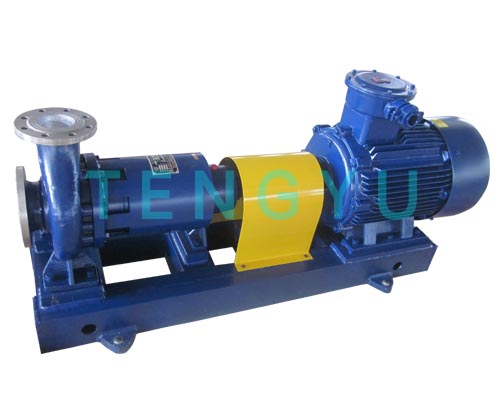
Securing reliable fluid handling equipment requires balancing upfront capital with operational readiness. Plant managers face immense pressure to keep operations running smoothly without tying up cash in unnecessary stock. Misjudging procurement timelines for a specialized pump can lead to costly plant downtime or bloated inventory. Unlike off-the-shelf commercial units, sealless pumps often require specific wetted materials and magnet configurations based on chemical compatibility and system pressure. This customization directly impacts both Minimum Order Quantity (MOQ) and production lead times.
This guide provides a strategic framework for procurement managers and engineers to align operational forecasting with supplier realities. You will learn how to anticipate supply chain bottlenecks and structure your purchasing contracts effectively. By applying these methods, you ensure continuous production without over-leveraging your budget.
Your technical requirements directly dictate the commercial terms of your procurement. Manufacturers cannot simply pull highly customized industrial equipment from a warehouse shelf. They build them to match precise operational parameters. This engineering reality creates a "customization premium." It affects both the price you pay and the time you wait.
Understanding this premium helps you set realistic expectations. Engineers often specify exotic materials to handle aggressive chemicals. Procurement teams must then navigate the commercial friction these choices create. The material you select serves as the primary driver for MOQ thresholds.
Foundries and machining centers operate on volume. Standard configurations use stainless steel housings and PEEK gears. These materials are widely available. Manufacturers keep them in stock. As a result, you generally see lower MOQs for these units. You can often order just one to five units. You will likely face shorter lead times, typically ranging from four to eight weeks.
Specialty requirements change the equation entirely. If your application demands titanium housings or high-temperature SmCo magnets, timelines stretch. Foundries require minimum pour weights for exotic alloys. They will not cast a single titanium housing. This reality triggers batch-casting requirements. It heavily increases MOQ thresholds. You might need to order ten or twenty units. It also extends lead times to 12 to 20 weeks or more.
Physical production only represents one phase of fulfillment. Stringent compliance testing adds mandatory weeks to your schedule. You cannot expedite these processes.
When you finalize your magnetic drive gear pump specifications, factor these testing windows into your timeline. Skipping them compromises safety, but including them demands proactive planning.
Many buyers mistakenly believe manufacturing time begins the day they issue a purchase order. In reality, multiple dependencies dictate the schedule. A magnetic pump's lead time is bound by its slowest-moving component. We often see rare-earth magnetic couplings or specialized seal rings causing the longest delays. Suppliers must source, cure, and coat these magnets before assembly can begin.
Forecasting requires a practical breakdown of every step in the supply chain. Use this structured approach to calculate your true delivery date.
Supply chains remain inherently volatile. Port congestions, material shortages, and foundry delays happen frequently. We advise adding a 15-20% time buffer to the quoted manufacturing lead time. If a manufacturer quotes ten weeks, plan your installation for week twelve. This buffer protects your project timeline from unforeseen disruptions. It ensures you have equipment ready when maintenance windows open.
High MOQs often frustrate procurement teams. However, manufacturers enforce them for practical reasons. CNC machining requires extensive setup time. Foundries enforce minimums for metal pouring. They need economies of scale to keep unit prices competitive. Understanding the supplier's perspective allows you to negotiate better terms.
Bottom-of-funnel (BoFu) buyers face immediate procurement needs. You can manage MOQ constraints using several proven strategies.
Applying these strategies helps you balance inventory risks. You maintain steady supply without locking up excess capital in idle equipment.
A low quoted lead time presents a massive risk if the supplier lacks the infrastructure to deliver on time. Desperate vendors sometimes promise aggressive timelines to win business. They then fail to meet those commitments. Vetting for reliability protects your operational schedule.
You must look beyond the initial sales pitch. Assess the operational capacity of the magnetic drive gear pump supplier before issuing a purchase order.
In-House vs. Outsourced Sourcing: Ask if the supplier machines their own parts. Do they rely entirely on third-party foundries? In-house capabilities generally mean more accurate lead time estimates. They control their own production queue. Outsourced models add layers of uncertainty.
Inventory Policies: Inquire about their stocking habits. Do they stock standard magnetic couplings and gear sets? Alternatively, is every order completely built-to-order? Suppliers holding strategic component inventory adapt faster to urgent requests.
Transparency: Gauge their communication style. Do they provide milestone updates during the production cycle? You should receive notifications like "castings received" or "testing completed." Proactive communication indicates robust internal tracking.
Prioritize suppliers who offer pilot programs. You want to execute single-unit testing before enforcing MOQs on full-scale plant rollouts. A pilot program validates hydraulic performance. It also tests the supplier's administrative efficiency and shipping reliability. Once they prove themselves on a single unit, you can safely negotiate a Blanket PO.
Sometimes operational realities clash with procurement constraints. You might face a situation where lead times for gear units are prohibitive. Plant shutdowns loom. In these cases, you must evaluate technology overlap and consider alternatives.
A magnetic drive coupling centrifugal pump often serves as a viable alternative for specific applications. Centrifugal variants are highly standardized in bulk chemical processing. Manufacturers produce them in massive volumes. Because they lack the tight internal tolerances of gear teeth, they are easier to cast and machine.
This standardization potentially offers shorter lead times. It also frequently lowers MOQs. However, you cannot swap them universally. Centrifugal units excel in less viscous, high-flow applications. They struggle with thick fluids or applications demanding precise metering.
Table 1: Procurement and Application Matrix
| Pump Technology | Typical Lead Time | Typical MOQ | Ideal Viscosity | Primary Application Strength |
|---|---|---|---|---|
| Gear Pump | 8 - 20+ Weeks | Moderate to High | High (Thick fluids) | Precise metering, high differential pressure. |
| Centrifugal Pump | 4 - 12 Weeks | Low to Moderate | Low (Water-like) | Bulk transfer, high volume flow rates. |
Guide your engineering team using strict operational parameters. You must wait for the magnetic drive gear pump if your process involves precise chemical metering. High viscosity fluids also mandate gear technology. High differential pressure environments require the positive displacement action gears provide.
Conversely, you can pivot to a readily available centrifugal pump if your primary goal is bulk transfer. If the fluid viscosity remains low and you just need to move liquid from tank A to tank B, centrifugals save time. Assess your actual fluid dynamics before accepting a long lead time blindly.
Successful procurement of sealless gear pumps requires moving beyond just the sticker price. You must evaluate the total time-to-implementation and consider the impact of inventory holding strategies. Balancing customization needs against manufacturing realities ensures your facility remains operational without wasting capital.
A: High-temp applications require Samarium Cobalt (SmCo) magnets and specialized clearances. Manufacturers typically produce these materials in dedicated batches. Foundries also enforce minimum pour weights for the exotic alloys needed to withstand extreme heat, making single-unit production economically unfeasible.
A: Partially. Assembly and testing can sometimes be rushed for an expedite fee. However, raw casting and magnet curing times are governed by physical limitations and chemistry. You cannot bypass the fundamental time required to cast metal and magnetize rare-earth components.
A: Yes. Due to typical 8-12 week lead times, waiting for a replacement causes catastrophic downtime. Maintaining at least one complete backup pump or a critical spares kit (gears, bearings, O-rings) per active unit is highly recommended to ensure continuous operation.