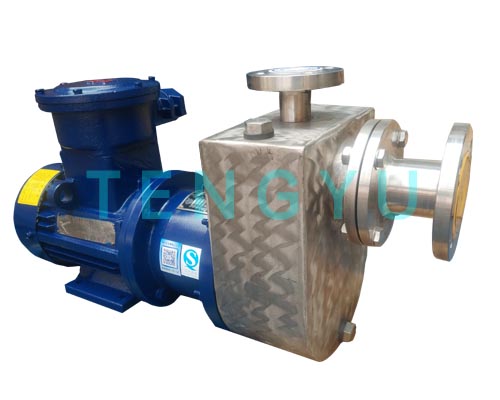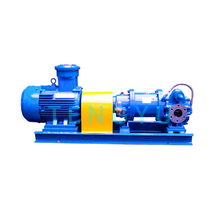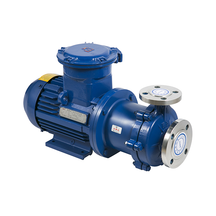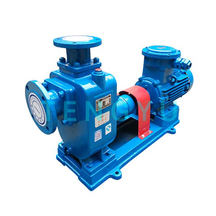
The primary value of a magnetic drive self priming pump is zero-leakage fluid handling. It combines this vital safety feature with top-down suction lift capabilities. However, selecting the wrong wetted or structural materials compromises both advantages entirely. Poor material choices lead to containment shell failures. They cause unexpected loss of prime or catastrophic chemical leaks. Self-priming pumps inherently handle air-fluid mixtures during the priming phase. Consequently, internal components face uneven thermal stress constantly. They also endure temporary but highly dangerous lubrication loss. Material choice goes far beyond basic chemical compatibility. It directly dictates thermal dissipation and dry-run tolerance. It influences lifecycle performance significantly. This guide breaks down how different material categories affect operational success. We evaluate engineered thermoplastics alongside high-grade metallic alloys. You will understand how these materials alter performance metrics. We aim to help you navigate bottom-of-funnel procurement specifications confidently. You will learn to mitigate risks effectively.
We must view material selection as a critical business decision. It is not merely a technical checkbox. Plant managers rely on these pumps for safe fluid transfer. A wrong material choice halts production lines rapidly. It introduces severe safety hazards to plant personnel.
Material density matters greatly in fluid dynamics. Structural rigidity affects internal clearances heavily. Self-priming requires pulling a vacuum in the suction line. To achieve this vacuum, the pump needs tight internal tolerances. Dense metallic alloys maintain these precise clearances under high pressure. They resist structural deflection exceptionally well. Thermoplastics offer different benefits but flex more under pressure. If a plastic casing distorts, internal clearances widen significantly. This widening drops the suction lift capability immediately. The pump struggles to evacuate air efficiently. It takes much longer to prime the system.
Material mismatches introduce severe operational risks. Imagine pumping high-temperature sulfuric acid continuously. If you select a standard polypropylene casing, disaster looms. The plastic deforms under sustained high temperatures. Deformation leads directly to containment shell rupture. A ruptured shell releases toxic fugitive emissions into the plant. Conversely, using the wrong metallic alloy causes rapid corrosion. Corrosive fluids eat away at stainless steel quickly. The metal thins out and eventually fails catastrophically. Environmental fines and severe safety hazards follow immediately. You must avoid these scenarios through rigorous material evaluation.
Procurement teams need a strict evaluation baseline. You must balance several critical operational factors simultaneously. We recommend evaluating these four primary parameters:
Common Mistake: Many engineers size a pump based solely on the ambient fluid temperature. They forget to account for the internal heat generated during a prolonged priming cycle. Always evaluate the maximum potential temperature inside the casing.
Engineers generally choose between two primary material families. They select either engineered thermoplastics or metallic alloys. Each category offers distinct advantages and hard limitations. You must map these traits to your specific application carefully.
Chemical processors love engineered plastics. Common choices include Polypropylene (PP) and Polyvinylidene Fluoride (PVDF). Ethylene Tetrafluoroethylene (ETFE) is also highly popular for aggressive applications. These plastics provide exceptional resistance to highly corrosive acids. They handle hydrochloric and sulfuric acids effortlessly. Thermoplastics offer another massive operational advantage. They generate absolutely zero magnetic eddy currents. The containment shell is completely non-conductive. Magnetic fields pass through it without creating electrical resistance. This means no parasitic heat transfers into the process fluid.
However, plastics have strict operational limitations. They are strictly bound by lower temperature limits. Most solid thermoplastics fail structurally above 200°F (90°C). They also have significantly lower pressure constraints than metals. Furthermore, plastics are highly vulnerable to hydraulic shock. A sudden valve closure can crack a plastic casing easily. System design must account for these mechanical vulnerabilities.
Heavy industries require robust metallic construction. Materials like 316 Stainless Steel and Hastelloy dominate this space. Alloy 20 handles specific hot acidic applications extremely well. These metals are required for extreme temperatures. They withstand high system pressures easily. Petrochemical facilities mandate them for strict safety reasons. Metallic casings handle external piping strain far better than plastics.
Despite their strength, metals introduce distinct thermal limitations. Conductive metallic containment shells create magnetic eddy currents constantly. The rotating magnetic field induces electrical currents in the stationary shell. This creates continuous parasitic heat loss. The heat warms the fluid inside the rear casing significantly. This reduces overall motor efficiency. More critically, it risks flashing volatile fluids. If a fluid boils during the priming phase, the pump loses prime. Vapor lock occurs rapidly, halting the transfer process.
You must account for these material differences during motor sizing. Eddy current losses shift your power requirements directly. Explain to your engineering team how material categories directly impact self priming magnetic drive pump magdrive efficiency curves. A plastic pump needs less horsepower than an identically sized metallic pump. This efficiency gap becomes highly noticeable in larger pump sizes.
| Material Category | Eddy Current Generation | Pressure Tolerance | Temperature Limit | Best Application |
|---|---|---|---|---|
| Polypropylene (PP) | None | Low | Up to 150°F (65°C) | Basic chemical transfer, water treatment |
| PVDF / ETFE | None | Medium | Up to 200°F (90°C) | Highly corrosive acids, clean chemicals |
| 316 Stainless Steel | High | High | Up to 500°F+ (260°C+) | Solvents, mild corrosives, high pressure |
| Hastelloy C | High | Extreme | Up to 500°F+ (260°C+) | Hot aggressive acids, petrochemical processing |
The internal bearings represent the most vulnerable components in any sealless system. They dictate whether your equipment survives harsh operational conditions. You must choose bearing materials with extreme precision.
By definition, a self-priming pump evacuates air from the suction line. It pulls air into the casing and pushes it out continuously. During this critical period, the pump lacks full fluid flow. The internal components lack adequate fluid lubrication. The bearings spin at high speeds in a partially dry state. Friction generates intense internal heat rapidly. Managing this heat is the ultimate engineering challenge.
Silicon Carbide remains the absolute industry standard. It provides unmatched wear resistance. It handles aggressive chemicals beautifully without degrading. However, standard SiC is highly brittle. It is severely vulnerable to thermal shock. Imagine a pump running dry for three minutes. The SiC bearings get incredibly hot. Suddenly, the pump achieves prime. A rush of cold fluid hits the hot bearings immediately. The sudden temperature change causes rapid thermal contraction. The standard SiC shatters instantly. The pump fails catastrophically right after priming.
Carbon offers superior self-lubricating properties naturally. It provides a vital safety buffer during operation. It survives extended priming times much better than SiC. It forgives accidental dry-running scenarios effectively. However, carbon has a distinct mechanical weakness. It wears significantly faster in abrasive applications. If your fluid contains tiny solid particles, carbon degrades quickly. It requires more frequent replacement in dirty fluid applications.
Manufacturers now offer highly specialized surface treatments. Diamond-like carbon (DLC) coatings are emerging rapidly. These coatings bond deeply to the SiC substrate. They reduce the coefficient of friction dramatically. They combine the extreme hardness of SiC with self-lubricating traits. They are designed specifically to solve dry-run vulnerabilities. They protect mag drive systems during exceptionally difficult priming cycles.
Selecting the right materials involves strict regulatory compliance. You must align your material choices with established industry standards. Different facilities require vastly different levels of certification.
You must differentiate between standard industrial builds and heavy-duty designs. Standard ISO chemical pumps use standard composite materials. They serve basic manufacturing processes perfectly well. Conversely, heavy-duty petrochemical applications require strict API 685 compliance. The API 685 standard mandates specific metallic alloys. It requires thicker casings and highly robust containment shells. It ensures the equipment survives refinery fires. It guarantees the pump withstands extreme external nozzle loads without deflecting.
Engineers constantly seek better containment shell designs. They want to eliminate eddy currents without sacrificing structural strength. Hybrid approaches are gaining massive traction today. We see carbon-fiber-reinforced non-metallic shells entering the market. Ceramic containment shells offer another brilliant engineering solution. They attempt to combine the high-pressure tolerance of metal. They simultaneously provide the zero-eddy-current benefits of plastics. These innovations change how we approach high-pressure chemical transfers fundamentally.
Material choices change motor sizing calculations entirely. Material-induced inefficiencies, like eddy currents, generate heat. They draw extra electrical power constantly. This parasitic loss must be calculated meticulously by your engineers. You must embed these calculations into the magnetic drive self priming pump specifications carefully. Doing so ensures proper motor sizing. It prevents overloading the electrical system during peak operation. It allows for accurate lifecycle performance modeling. It protects the facility from unexpected energy spikes and premature motor burnouts.
Your material strategy is only as good as your chosen vendor. You need a partner who understands fluid dynamics deeply. They must back their claims with verifiable engineering data.
Material integrity requires verifiable, documented proof. A reliable magnetic drive self priming pump supplier operates transparently. They should provide full material test reports (MTRs) gladly. MTRs prove the alloy composition matches your exact requirements. For instance, an MTR confirms the low carbon content in 316L stainless steel. Furthermore, demand verifiable factory acceptance testing (FAT). The FAT must replicate your specific suction lift requirements. It verifies the casing materials do not deflect under actual vacuum conditions.
Avoid vendors who merely sell catalog part numbers. Evaluate suppliers based on their core engineering rigor. They must show willingness to scrutinize your fluid properties intensely. They should ask about fluid viscosity and exact vapor pressure. They need to know about the presence of suspended solids. They should recommend materials based on these exact variables. A good engineer challenges your assumptions to protect your facility.
Industrial equipment requires routine maintenance eventually. Assess the availability of replacement wear parts thoroughly. You need fast access to specific impellers and containment shells. You must source bearing sets in the exact specified materials. Quick parts availability minimizes expensive operational downtime. It keeps your production schedule completely intact. Verify their supply chain resilience before issuing a final purchase order.
No single pump material solves every fluid handling challenge universally. The optimal choice requires mapping the fluid's chemical and thermal profile. You must weigh this profile against the mechanical realities of the self-priming process. To ensure long-term reliability and safety, keep these crucial action steps in mind:
A: Indirectly. The material dictates internal clearances and temperature limits. If a plastic shell deforms under heat, or a metal shell causes fluid flashing due to eddy currents, the pump will lose prime or fail to lift efficiently. Maintaining rigid internal geometry is critical for establishing a vacuum.
A: Generally, mag drive pumps struggle with solids due to tight internal clearances, regardless of casing material. However, specific abrasion-resistant internal materials (like robust SiC bearings) paired with proper filtration can handle low concentrations of fine, non-ferrous solids successfully.
A: API 685 requires pumps to withstand high external nozzle loads, extreme system pressures, and potential refinery fires. These are harsh physical conditions that standard thermoplastics simply cannot survive without melting, cracking, or catastrophic structural deflection.