Process engineers face major hurdles when scaling up tall or large-volume processing vessels. Traditional top-entry mixing often presents insurmountable shaft length and severe vibration challenges. You must carefully evaluate whether a bottom entry agitator is the most technically and financially viable choice for high-stakes applications. This is especially true when addressing the distinct fluid dynamic needs of crystallizers and fermenters. Incorrect equipment selection leads to poor yields, heavy structural fatigue, and dangerous mechanical failures. We will move past generic equipment descriptions to objectively weigh structural advantages against mechanical seal risks. You will discover practical methods to handle maintenance downtime and navigate stringent hygienic compliance requirements. By understanding these engineering trade-offs, you can confidently specify mixing solutions matching your exact process demands.
Structural Efficiency: Bottom entry configurations eliminate the need for excessively long, vibration-prone shafts in deep vessels, reducing structural stress on the tank roof.
Process Specificity: They excel in handling heavy slurries in crystallizers and maximizing gas dispersion at the sparger level in fermenters.
The Trade-off: The primary operational risk is the submerged mechanical seal, requiring rigorous maintenance protocols and mandatory vessel draining for servicing.
Compliance & Hygiene: Modern sanitary designs (CIP/SIP) have mitigated historic contamination risks, making them viable for pharma and biotech.
Specifying the right mixing equipment requires a deep understanding of mechanical limitations. Top-entry mixers struggle significantly in exceptionally tall tanks. As vessel height increases, engineers must lengthen the mixer shaft. A longer shaft drops the critical speed limits of the equipment. If the mixer operates too close to its critical speed, it experiences violent vibrations. These vibrations severely damage gearboxes, bend shafts, and destroy mechanical seals. To fix this, engineers often install in-tank steady bearings. However, steady bearings are notoriously difficult to clean and maintain, making them unacceptable for sanitary applications.
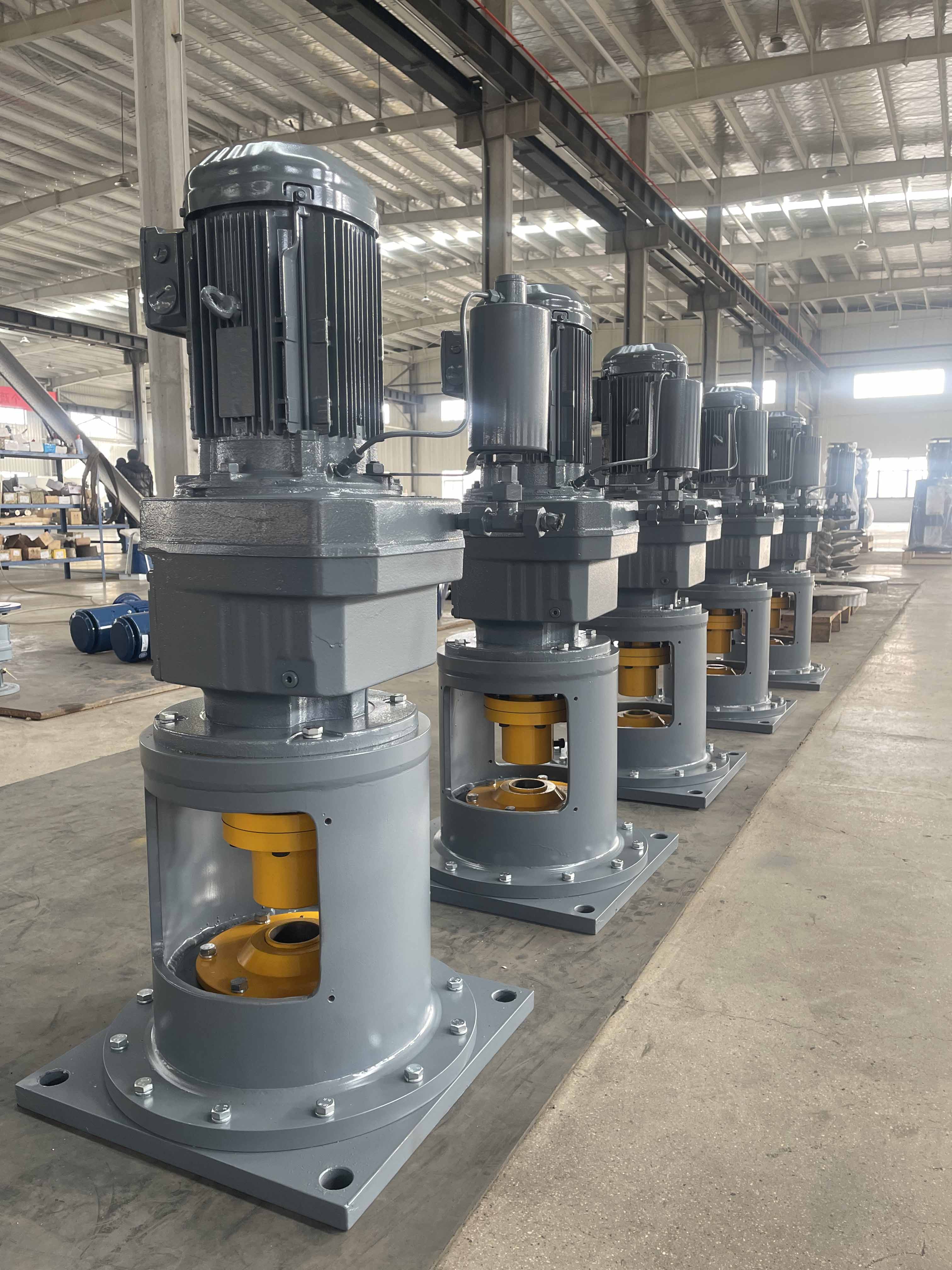
You can solve this long-shaft problem directly by specifying a bottom mounted agitator. By moving the drive unit to the base of the tank, you eliminate the need for long, unstable shafts. The shaft only needs to be long enough to reach the mixing zone. This short, robust shaft easily handles high torque without deflecting. It completely removes the need for in-tank steady bearings, instantly improving hygienic compliance.
Vessel integrity also improves drastically. Heavy top-entry drives place immense structural loads on the tank head. This requires thick, expensive roof reinforcements. A bottom-entry setup transfers the heavy drive weight directly to the solid floor or lower support structures. It relieves the tank roof of severe dynamic stresses. Furthermore, it frees up critical facility headroom above the vessel. You gain valuable vertical space for piping, maintenance access, and cleanroom HVAC systems.
Low-level mixing capabilities represent another major engineering advantage. Standard top-entry mixers often leave a significant "dead zone" at the bottom of the tank. They cannot mix effectively when the fluid level drops below the primary impeller. Bottom-entry designs solve this gracefully.
Continuous Agitation: They maintain active agitation during the entire filling and emptying process.
Preventing Settling: They prevent heavy product solids from settling and caking at low fluid volumes.
Better Yields: They ensure the last few gallons of product remain perfectly homogeneous before discharge.
Improved Heat Transfer: They keep fluids moving across bottom heating jackets even when the tank is nearly empty.
Common Mistake: Do not assume a bottom-entry mixer can run dry. While they excel at low-level mixing, running the mechanical seal without fluid coverage will quickly destroy the seal faces due to heat buildup.
Process engineers must weigh upfront capital expenditure (CapEx) against long-term operating expense (OpEx) when comparing mixer configurations. Top-entry mixers generally offer lower OpEx because their mechanical seals sit above the liquid line. Operators can service them easily without draining the tank. However, for very large or tall vessels, top-entry mixers demand massive support structures. You must pay for thicker tank heads, larger mounting flanges, and heavy-duty structural steel. This drives initial CapEx exceptionally high.
Conversely, bottom-entry systems lower your initial structural CapEx. The tank roof requires minimal reinforcement. The equipment utilizes shorter shafts and smaller mounting flanges. However, they potentially introduce higher OpEx. You must invest in specialized mechanical seal monitoring systems. Routine maintenance requires more labor and careful planning because the seal operates completely submerged in the product.
Process isolation risks remain the core limitation of bottom-entry designs. The fundamental reality is simple: if a bottom seal fails, the tank leaks. This presents a severe risk when handling hazardous, toxic, or highly valuable pharmaceutical products. To mitigate this risk, you must evaluate the necessity of double mechanical seals. Double seals use a pressurized barrier fluid system. If the primary inner seal fails, the barrier fluid prevents the process product from escaping into the environment. It also triggers an alarm, giving operators time to execute a controlled shutdown.
Maintenance realities demand strict operational protocols. You cannot simply unbolt a bottom drive unit while the tank is full. Maintenance teams must completely empty the vessel. They must decontaminate the interior before safely servicing the drive unit or seal cartridge. This requires planned downtime and closely coordinated production schedules.
Table: High-Level Comparison of Mixer Configurations
Evaluation Criteria | Top-Entry Mixers | Bottom-Entry Mixers |
|---|---|---|
Structural CapEx | High (requires thick tank roof and steel supports) | Low (weight supported by floor/base) |
Seal Maintenance OpEx | Lower (accessible above liquid level) | Higher (requires specialized monitoring) |
Leakage Risk | Minimal (seal is above fluid level) | High (submerged seal requires barrier systems) |
Maintenance Downtime | Moderate (serviced in place) | Extensive (requires total vessel draining) |
Best Practice: Always install continuous barrier fluid pressure monitoring on bottom-entry seals. Sudden pressure drops serve as the earliest warning sign of impending seal failure, saving you from catastrophic product loss.
Crystallization requires highly specific fluid dynamic conditions to succeed. Engineers must achieve uniform suspension of heavy, high-density particles. If particles settle at the bottom, they agglomerate and ruin the batch. However, achieving this suspension introduces a massive challenge: you must do it without inducing high shear. High shear forces cause crystal attrition. When delicate crystals break apart, the final product suffers from poor purity, incorrect particle size distribution, and poor filtration characteristics.
A well-designed crystallizer mixer masters this delicate balance of "suspension without destruction." A bottom-entry configuration proves uniquely suited for this task. It allows engineers to place large, low-speed hydrofoil impellers exactly where the settling occurs. By positioning the impeller just above the tank floor, it generates a massive upward axial flow.
This upward flow gently lifts heavy crystals into the main bulk of the fluid. Because the impeller operates at very low rotational speeds, it imparts minimal shear stress to the fluid. It successfully sweeps the tank bottom clean without smashing the fragile crystals against the vessel walls or baffles.
Thermal control integration is another critical factor in continuous crystallization. The process heavily relies on strict temperature gradients. The vessel heating or cooling jackets must perform efficiently to control crystal nucleation and growth rates. Bottom agitation improves this interaction significantly.
The bottom-mounted impeller actively pushes fluid against the lower jacketed surfaces.
This motion constantly refreshes the thermal boundary layer along the tank walls.
It prevents localized cold or hot spots from forming near the bottom discharge valve.
Uniform temperature distribution ensures consistent crystal growth across the entire batch volume.
By optimizing both upward flow and thermal boundary refreshment, bottom-entry mixers provide the gentle but thorough agitation necessary for high-yield crystallization.
Aerobic fermentation presents a completely different set of fluid dynamic challenges. Here, mass transfer optimization dictates the success of the batch. Microorganisms require a constant, dissolved supply of oxygen to thrive and reproduce. The Oxygen Transfer Rate (OTR) is the most critical metric for any fermenter agitator. You must efficiently break down large air bubbles into millions of micro-bubbles to maximize the gas-liquid interfacial area.
A bottom-entry configuration excels in optimizing OTR. It positions high-shear impellers, such as Rushton turbines, directly above the gas sparger. As the sparger releases large air bubbles into the bottom of the tank, the impeller immediately shears them. This immediate bubble shearing prevents gas from bypassing the mixing zone. It forces the gas outward radially, dramatically increasing oxygen absorption before the bubbles rise through the liquid column.
Despite these process advantages, engineers often express skepticism around submerged seals in biological processes. Historic designs suffered from contamination issues. Modern hygienic designs have completely mitigated these risks. Clean-in-Place (CIP) and Sterilize-in-Place (SIP) protocols are now standard.
To ensure biological safety, you must demand specific hygienic features. Sanitary mechanical seals use flushable chambers to remove any trapped organic matter. The equipment must feature crevice-free geometries. Welds must be polished to specific Ra values to prevent bacterial adhesion. You must ensure the entire wetted assembly strictly complies with ASME BPE (Bioprocessing Equipment) standards. These features guarantee the system sterilizes reliably between fermentation batches.
Vortex control also plays a vital role in fermenter design. Rapid bottom agitation naturally tends to spin the entire fluid mass, creating a deep central vortex. A vortex traps unwanted surface air and causes poor nutrient mixing. You must use bottom agitators in conjunction with properly sized wall baffles. Baffles convert the swirling rotational flow into vertical top-to-bottom turnover. This ensures homogeneous nutrient distribution, feeding the microorganisms evenly and boosting overall yield.
Selecting the right vendor is just as crucial as selecting the right mixer configuration. You must evaluate manufacturers based on their engineering capabilities, material quality, and long-term support infrastructure. Do not make purchasing decisions based solely on the lowest initial quote. Focus heavily on criteria that reduce maintenance downtime and guarantee process compliance.
Seal cartridge technology should be your first evaluation point. Look for vendors offering easily removable, pre-tested mechanical seal cartridges. Traditional seals require piece-by-piece assembly underneath the tank, leading to installation errors. A modern cartridge seal slides in as one complete, factory-aligned unit. This minimizes maintenance downtime and ensures perfect seal face alignment from day one.
Computational Fluid Dynamics (CFD) modeling is mandatory for high-stakes applications. Never purchase a large mixer based on guesswork. Require vendors to provide comprehensive CFD modeling specifically tailored to your process parameters. They must input your exact fluid viscosity, specific gravity, particle density, and tank geometry. The CFD report must visually prove the mixer achieves desired flow patterns, avoids dead zones, and hits target shear rates prior to procurement.
Material traceability and compliance represent strict non-negotiables for pharmaceutical, biotech, and food applications. You must ensure the vendor provides full documentation packages. This includes FDA compliance certificates for elastomers, cGMP design declarations, and certified material test reports (CMTRs) for all wetted metal parts. Without this documentation, you cannot validate your process line for regulatory audits.
Finally, thoroughly evaluate drive reliability. The gearbox and bearing housing act as the heart of the machine. They do not just spin the shaft. They must support the immense rotational torque and absorb the severe hydraulic thrust generated by the product. Look for oversized output shafts and heavy-duty tapered roller bearings. A robust drive unit prevents shaft deflection, which ultimately protects the fragile mechanical seal faces from premature failure.
Checklist for Vendor Evaluation:
Do they offer pre-aligned, drop-in mechanical seal cartridges?
Can they provide custom CFD flow simulations for your specific tank geometry?
Do they supply a full ASME BPE and FDA compliance documentation turnover package?
Is the gearbox explicitly rated to handle upward hydraulic thrust forces?
A bottom entry agitator is not a universal solution for every mixing application, but it stands as the superior architectural choice for tall vessels where shaft stability and low-level mixing are paramount. It elegantly solves the mechanical nightmares associated with extra-long shafts and eliminates the need for unhygienic steady bearings. By shifting the drive weight to the floor, it also preserves vessel roof integrity and valuable facility headroom.
Process engineers must balance process benefits against stringent maintenance demands. You gain incredible advantages in gentle, low-shear crystallization and high-yield, high-OTR fermentation. However, you must accept the operational realities of submerged sealing systems. This requires disciplined preventative maintenance, continuous barrier fluid monitoring, and mandatory tank draining during service intervals.
Take proactive steps early in your equipment design phase. Initiate vendor conversations immediately armed with your exact process data. Provide them with accurate viscosity curves, specific gravity limits, and CIP requirements. Request comprehensive CFD validation to prove the design works before metal is ever cut. By demanding rigorous engineering upfront, you ensure decades of reliable, leak-free process performance.
A: Abrasive particle ingress, dry running, and barrier fluid pressure loss are the primary culprits. When abrasive slurries penetrate the seal faces, they cause rapid wear. Dry running generates excessive heat, destroying the elastomers. Maintaining correct barrier fluid pressure is critical to keep product out of the seal chamber.
A: Yes, they can be fully cleaned in place. Modern sanitary designs feature self-draining profiles and eliminate dead legs. They utilize flushable double mechanical seals designed specifically for CIP and SIP (Sterilize-In-Place) protocols. This ensures complete decontamination without requiring equipment disassembly.
A: The tipping point typically occurs in vessels exceeding 10,000 liters or those taller than 5 meters. At these scales, the cost of reinforcing the tank roof to support a heavy top-entry drive system becomes prohibitive. Extra-long shafts also require expensive specialty alloys and steady bearings, making bottom-entry financially superior.
A: You must completely empty the vessel before servicing a standard bottom-mounted drive unit. For highly specialized or continuous processes, some units feature advanced seal shut-off mechanisms. These retractable seals isolate the process fluid, allowing operators to replace the primary seal without draining the entire tank.