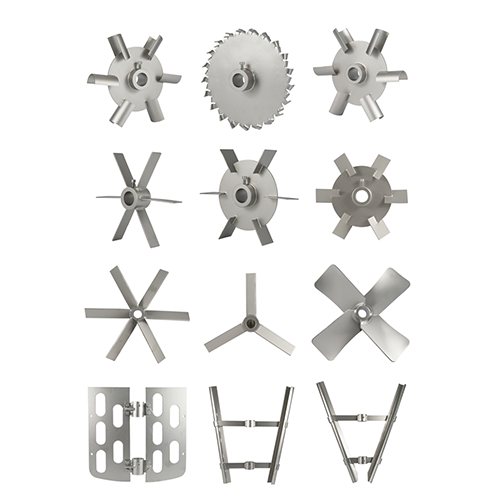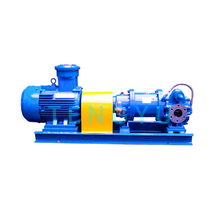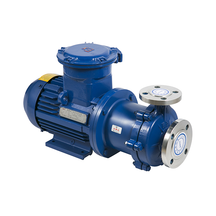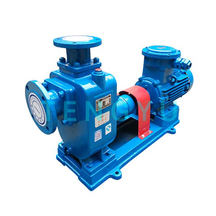
Procurement teams and facility engineers often face a persistent terminology problem. They frequently use "agitator" and "mixer" interchangeably during equipment specification. This loose terminology leads directly to severe specification mismatches on the production floor. The stakes for getting this wrong remain remarkably high across manufacturing sectors. Applying incorrect fluid handling dynamics causes ruined product batches and unpredictable yields. Incorrect choices also trigger extreme energy consumption and accelerate premature mechanical wear on drive components. You must understand these specific mechanical differences to protect your production lines. This article provides a rigorous technical framework to resolve the ongoing agitator vs mixer debate. We will explore how to select the right equipment based on complex fluid rheology. You will learn how to properly evaluate shear requirements. Finally, we will guide you through adapting these engineering choices to your specific production scale.
Fundamental difference: Agitators are designed to maintain a state (keeping solids suspended or normalizing temperature), while mixers are designed to alter a state (combining disparate materials into a new homogeneous phase).
Shear vs. Flow: Mixers typically operate with higher shear forces to break down particles or droplets; agitators prioritize bulk fluid flow and circulation.
Viscosity dictates design: High-viscosity applications often force a transition from standard agitators to specialized heavy-duty industrial mixing equipment.
Pilot testing is non-negotiable: Theoretical fluid modeling must be validated with physical pilot testing to verify mechanical seal integrity and power draw before full-scale deployment.
Agitators focus primarily on inducing motion within an already uniform fluid. They excel at keeping solid particulates actively in suspension. Engineers design them to operate using bulk fluid flow rather than intense shear forces. They maximize pumping capacity to move large volumes efficiently. A common application includes using a standard tank mixer during bulk storage. This prevents chemical stratification over time. It also helps maintain uniform heat transfer across vessel walls.
We see agitators deployed frequently in bulk chemical storage tanks. They continuously push liquid from the top down to the vessel bottom. This axial flow pattern maintains a stable material equilibrium. You do not use them to change the molecular structure. You use them to preserve the existing fluid state. Hydrofoil impellers typically drive this highly efficient fluid circulation. They generate massive flow rates with minimal energy input.
Mixers focus on combining two or more distinct substances. They handle liquid-liquid, solid-liquid, or gas-liquid combinations expertly. They overcome specific gravitational and chemical resistances. This creates stable emulsions, dispersions, or complex chemical solutions. They rely heavily on precisely controlled shear rates. High shear mechanically reduces particle and droplet sizes rapidly.
You need a mixer when ingredients resist natural blending. High-speed rotational impellers physically tear fluid droplets apart. This intensive mechanical action forces disparate materials into a single homogeneous phase. Mixers permanently alter the physical properties of the raw ingredients. Radial flow impellers usually provide the aggressive impact needed here. They throw material outward against the tank walls forcefully.
You must map your equipment directly to specific centipoise (cP) ratings. Viscosity dramatically alters how fluids respond to mechanical forces. Water sits at 1 cP. Thick industrial pastes often exceed 100,000 cP. Engineers design specific impellers for these highly distinct ranges. Non-Newtonian fluids create unique engineering challenges during process scale-up. Shear-thinning fluids become less viscous under mechanical stress. Paints and polymer solutions exhibit this specific structural behavior.
Shear-thickening fluids resist motion as rotational speeds increase. Dense mineral slurries often demonstrate this difficult characteristic. These rheological shifts directly impact your final equipment choice. You must carefully decide between low-speed agitators and high-shear mixers. Heavy-duty industrial mixing equipment handles these complex viscosity spikes reliably. Tracking viscosity changes throughout the entire batch cycle remains crucial.
Operators constantly evaluate the fundamental trade-off between shear and flow. High shear requires significantly more horsepower to operate. It also relies on smaller impellers spinning at aggressive speeds. Conversely, high bulk flow requires large-diameter impellers. These large impellers operate at much lower rotational speeds. Flow moves material across the entire tank geometry.
You cannot maximize both shear and flow simultaneously. Facility engineers must prioritize one dynamic based on process goals. Pumping volume ensures the entire tank turns over evenly. Shear rate dictates how quickly particles break down inside the localized mixing zone. Selecting the wrong priority extends batch processing times significantly. It also leaves unmixed material stagnating in the vessel corners.
Your production style heavily influences the mechanical configuration. Batch operations frequently favor top-entry or side-entry agitators. They manage discrete volumes inside fixed holding vessels securely. Engineers calibrate these units based on maximum and minimum fill lines. This prevents damaging mechanical vibrations when fluid levels drop. Batch processing allows operators to verify quality before discharging.
Continuous flow systems require entirely different internal architectures. They often demand inline dynamic mixers to handle ongoing material feeds. Sometimes, facilities implement static pipeline solutions for continuous processing. Inline systems apply intense shear instantly as fluid passes through. They eliminate the need for massive holding tanks entirely. This saves valuable floor space in modern manufacturing facilities.
Specify an agitator for tasks focused on state maintenance. Common scenarios demanding pure fluid agitation include:
Solid suspension to keep heavy slurry from settling on the bottom.
Heat transfer optimization to disrupt boundary layers continuously.
Blending multiple miscible liquids possessing very similar viscosities.
Crystallization processes requiring gentle, uniform temperature control.
Jacketed tanks rely heavily on constant boundary layer disruption. This prevents localized burning or freezing near the vessel walls. The agitator sweeps the wall surface continuously. It brings fresh fluid into contact with the heat exchange surface. This ensures temperature uniformity throughout the entire batch.
Specify a mixer for tasks focused on aggressive material transformation. You will need intensive mixing forces for:
Emulsification of traditionally immiscible liquids like oil and water.
Powder wet-out and rapid dispersion processes.
High-intensity gas dispersion into dense liquid volumes.
Homogenization of complex cosmetic or pharmaceutical creams.
Mixers prevent frustrating powder agglomeration effectively. They eliminate unmixed "fish-eyes" during delicate polymer hydration. The intense mechanical impact forces powders into the liquid phase instantly. This action destroys lumps before they can form stable outer shells.
Agitator vs. Mixer Capability Summary
Process Goal | Preferred Equipment | Primary Dynamic Force | Typical Impeller Style |
|---|---|---|---|
Solid Suspension | Agitator | High Flow / Axial Pumping | Hydrofoil / Pitch Blade |
Liquid Emulsification | Mixer | High Shear / Radial Impact | Sawtooth / Rotor-Stator |
Heat Transfer | Agitator | Flow / Constant Circulation | Anchor / Pitch Blade |
Powder Dispersion | Mixer | Shear / Mechanical Tearing | High Shear Cowles |
Selecting the wrong impeller type introduces severe operational risks. Pairing axial flow impellers where radial flow is required ruins efficiency. Incorrect pairings place immense lateral stress on the central shaft. This stress causes dangerous shaft deflection during continuous operation. You must actively manage shaft fatigue and mechanical vibration. Small imbalances amplify into destructive forces over time.
Varying fluid depths significantly alter the natural frequency of the shaft. Running near critical speeds destroys gearboxes rapidly. Engineers must calculate specific harmonic resonances before finalizing the design. Proper stabilizer rings mitigate these destructive lateral forces effectively. You must design shafts to handle the most severe viscosity spikes anticipated.
Fluid containment dictates the lifespan of your mechanical equipment. Standard lip seals offer basic protection in atmospheric conditions. However, sanitary environments demand entirely different containment strategies. You must deploy double mechanical seals in high-pressure vessels. They prevent cross-contamination and dangerous environmental chemical leaks.
Maintenance realities make seal selection a critical engineering priority. Replacing a damaged seal halts production entirely. We recommend barrier fluid systems for hazardous chemical applications. They provide a safe buffer zone between the product and the atmosphere. Routine seal inspections prevent catastrophic pressure failures during batch processing.
Over-speccing your equipment heavily inflates long-term electrical demands. A heavily oversized motor draws unnecessary kilowatts during every batch. Process engineers must perfectly match horsepower to actual rheological needs. Running high-shear impellers unnecessarily wastes massive amounts of kinetic energy. The fluid converts this wasted energy directly into unwanted heat.
Optimize your motor size to keep energy profiles sustainable. Variable frequency drives (VFDs) offer excellent operational flexibility. They allow operators to ramp down speeds during simple holding phases. This significantly reduces overall power draw during off-peak processing times. VFDs also provide softer mechanical starts, protecting the gearbox.
Strict compliance baselines govern equipment construction across critical industries. Food and pharmaceutical applications require specific sanitary construction standards. You must adhere strictly to FDA and 3-A SSI design guidelines. These rules mandate smooth welds and easily cleanable interior surfaces. Dead legs in the tank design harbor dangerous bacterial growth.
Hazardous manufacturing zones require ATEX-certified explosive-proof motors. Ignoring these compliance frameworks introduces unacceptable safety risks. Facility managers must audit chemical compatibility before final installation. Stainless steel alloys provide the safest baseline for volatile environments. Certain acids require highly specialized Hastelloy components to prevent rapid corrosion.
Clear success criteria prevent vague equipment specifications entirely. You must explicitly define your target physical outcome beforehand. Do you need a "homogeneous blend in 15 minutes"? Or do you simply need to "maintain suspension for 72 hours"? These two scenarios require vastly different mechanical approaches.
Precise definitions streamline the vendor quoting process immediately. Ambiguous requests lead to conservative, oversized equipment quotes. Define acceptable tolerance levels for particle size reduction. Specify exactly what a failed batch looks like for your operation. Share these parameters openly with your engineering partners.
Vendors need precise data to size your process mixing system correctly. Provide detailed tank geometry, including precise aspect ratios. Document the exact baffle configuration inside your current vessels. Supply accurate specific gravity metrics for all raw ingredients. Missing data leads to assumptions, which lead to mechanical failures.
You must also record starting viscosity and projected final viscosity. Temperature fluctuations alter viscosity dramatically during processing phases. Include minimum and maximum operating temperatures in your RFQ document. This ensures the motor handles the highest possible mechanical load safely. Document any expected shear-thinning behaviors.
Theoretical modeling only provides a foundational starting point. Computational fluid dynamics (CFD) is insufficient without real-world validation. You must conduct physical pilot testing to ensure safe scalability. Pilot tests reveal unexpected rheological behaviors before full-scale deployment. They highlight dead zones that software models occasionally miss.
They validate motor sizing and confirm impeller effectiveness physically. Small-scale testing highlights potential aeration issues inside the mixing vessel. We rely on physical pilot data to guarantee process outcomes. Never skip this physical verification step for complex chemical blends. It prevents massive production failures at full scale.
The fundamental equipment decision always hinges on flow versus shear. You must critically evaluate whether your goal is maintaining or altering materials. Avoiding assumptions about equipment terminology prevents massive retrofit scenarios later. Let raw fluid data drive your mechanical specification process directly.
Remember these actionable next steps before purchasing new equipment. First, map your exact fluid viscosity and required shear rates. Second, define clear physical success criteria for every batch operation. Finally, validate all theoretical computational models with rigorous pilot testing. Contact a dedicated process engineer or submit your parameters to technical sales for a customized sizing analysis today.
A: Only for highly miscible liquids with similar viscosities. Attempting to use a low-shear agitator to combine difficult, immiscible ingredients will result in incomplete blending and wasted processing time. They simply lack the mechanical force to break down stubborn droplets or heavy powders effectively.
A: A static mixer has no moving parts and relies on the pressure of the fluid moving through pipeline baffles to blend materials continuously. An agitator is a dynamic, motorized piece of equipment typically used in batch tank processing to maintain fluid motion.
A: Tank aspect ratios (height vs. diameter) and the presence of baffles drastically change flow patterns. Mixers often require specific baffle placements to prevent vortexing, whereas simple agitation in shallow tanks may have less rigid geometric constraints. Incorrect geometry severely limits both shear and flow efficiency.